Japanese Dragon Backpiece in Black and Grey | Horiyama Aucklan, NZ
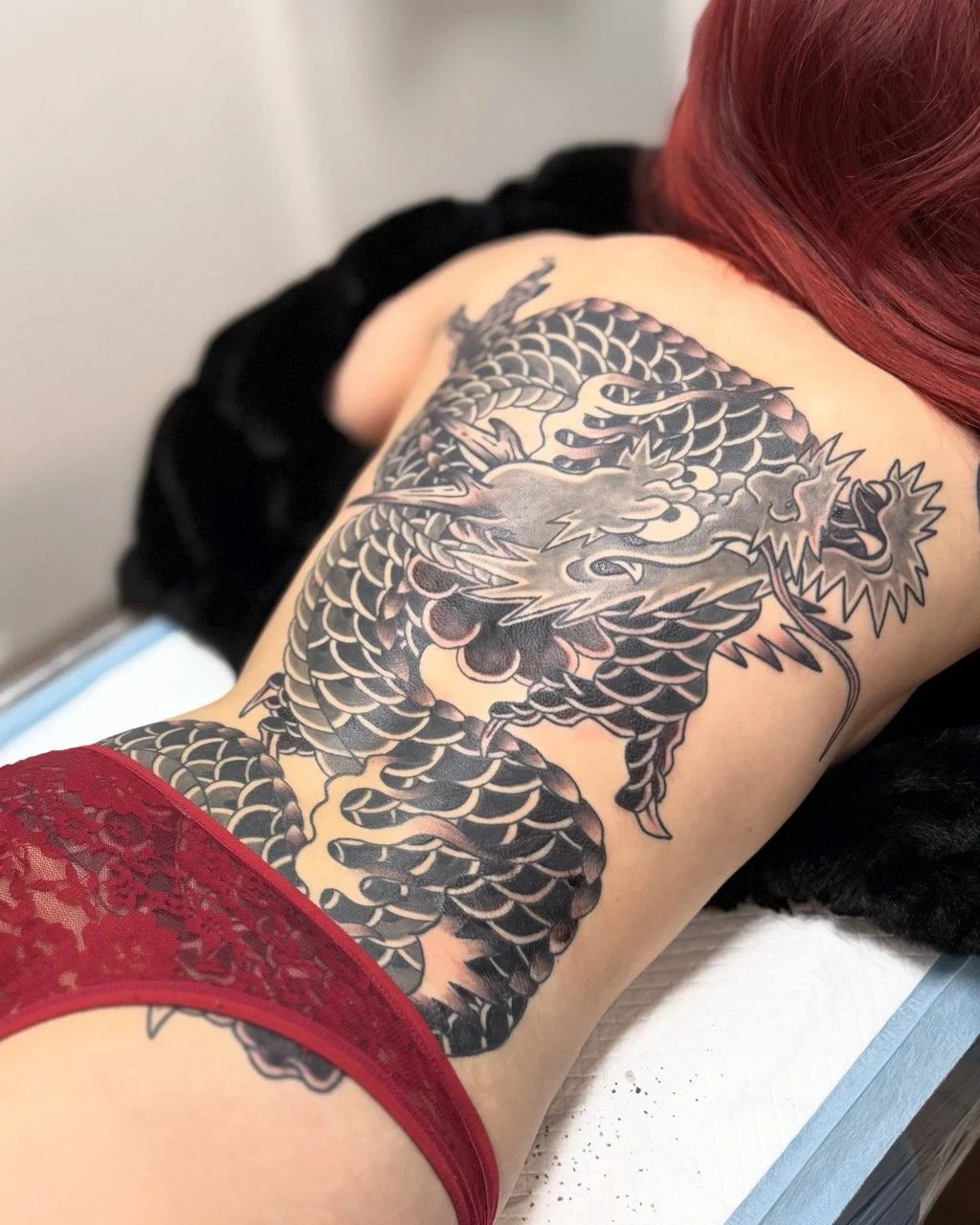
Japanese black and grey dragon back piece done by Horiyama. Auckland New Zealand
Some tattoo projects are especially rewarding to work on, and this Japanese dragon backpiece for Emma is one of them.
I first met Emma when she came to me for a Japanese tattoo sleeve featuring her two cats and cherry blossoms. After completing her sleeve, we decided to continue her Japanese bodysuit with a dragon backpiece, bringing another large-scale piece of traditional Japanese-inspired imagery to her collection.
Emma has been an incredible client throughout this journey, and I’m so happy with how this piece has come together. I feel honoured to work with such an amazing person.
A Japanese Dragon Backpiece in Black and Grey
For Emma’s backpiece, we chose a Japanese dragon as the main subject, tattooed in black and grey.
I absolutely love working in black and grey. There is something special about building depth, movement and contrast using different shades of black and grey ink. Without relying on colour, the composition has to work through strong shapes, carefully considered shading and the balance between dark and open skin.
Japanese dragon tattoos are particularly rewarding because of the movement and detail involved. The curves of the body, individual scales, facial features and surrounding ligaments all need to work together to create a cohesive design that follows the natural form of the back.
When designing a large-scale Japanese tattoo, I always consider how the subject will sit on the body, how the composition flows from different angles, and how the finished tattoo will complement any existing or future work.
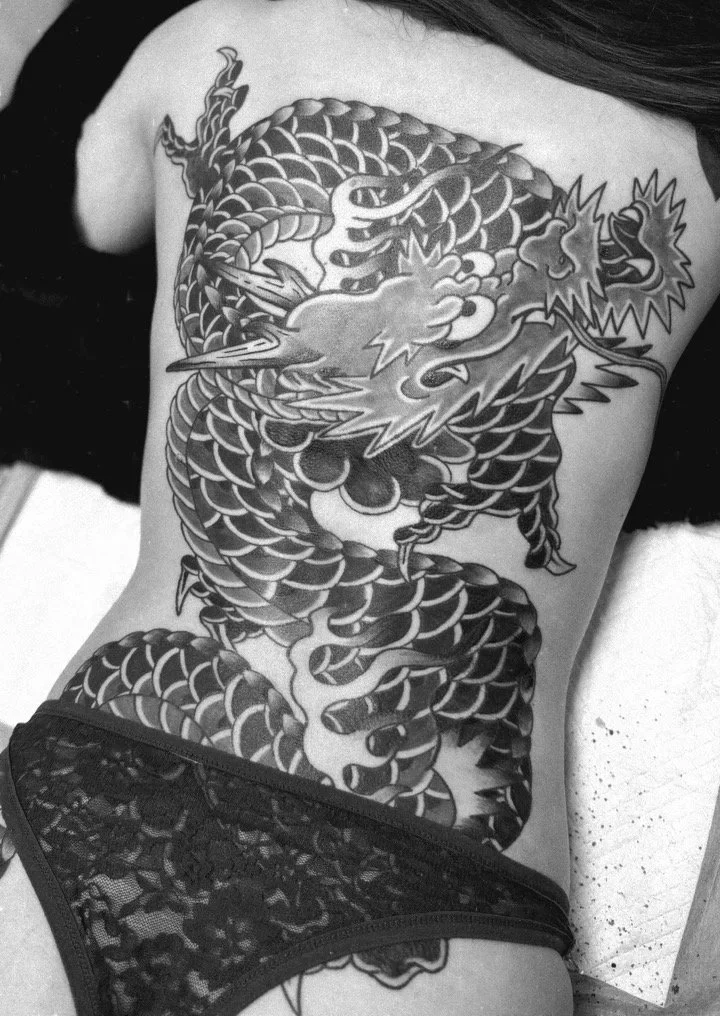
Dragon back piece done by Japanese tattoo artist Horiyama. Auckland, New Zealand
Do Japanese Tattoos Need Background?
One of the things I love about Japanese tattooing is the flexibility within the composition.
For Emma’s dragon backpiece, she chose not to have a traditional background added. Instead, we kept the focus on the dragon itself.
In Japanese tattooing, the background, often referred to as gakubori, can play an important role in framing the main subject, creating movement and bringing the overall composition together. Elements such as wind bars, clouds and other background motifs can help unify a large tattoo across the body.
However, a background isn’t always necessary.
There is a real beauty in letting the foreground subject matter stand on its own, especially across a large area such as the back. Leaving more open skin around the dragon gives the subject room to breathe and allows the details of the scales, face and body to stand out.
Another advantage is that Japanese tattooing can be approached in stages. If you decide to add a background in the future, it can be incorporated into the existing composition where appropriate.
Every tattoo is different, and I believe the design should reflect the individual client, their preferences and the overall look they want to achieve.
Four Full-Day Sessions
We completed Emma’s Japanese dragon backpiece over four full-day tattoo sessions.
Large-scale Japanese tattoos require time, patience and commitment from both the artist and the client. A backpiece involves a substantial amount of work, and completing it across multiple sessions allows us to build the tattoo progressively while working carefully through the different areas.
I have so much appreciation for clients who commit to these projects. Sitting for long sessions is no small feat, and completing a large Japanese tattoo takes real determination.
Emma has been amazing throughout the entire process. She travels from out of town to Auckland to get tattooed, and I genuinely appreciate the trust she places in me with these projects.
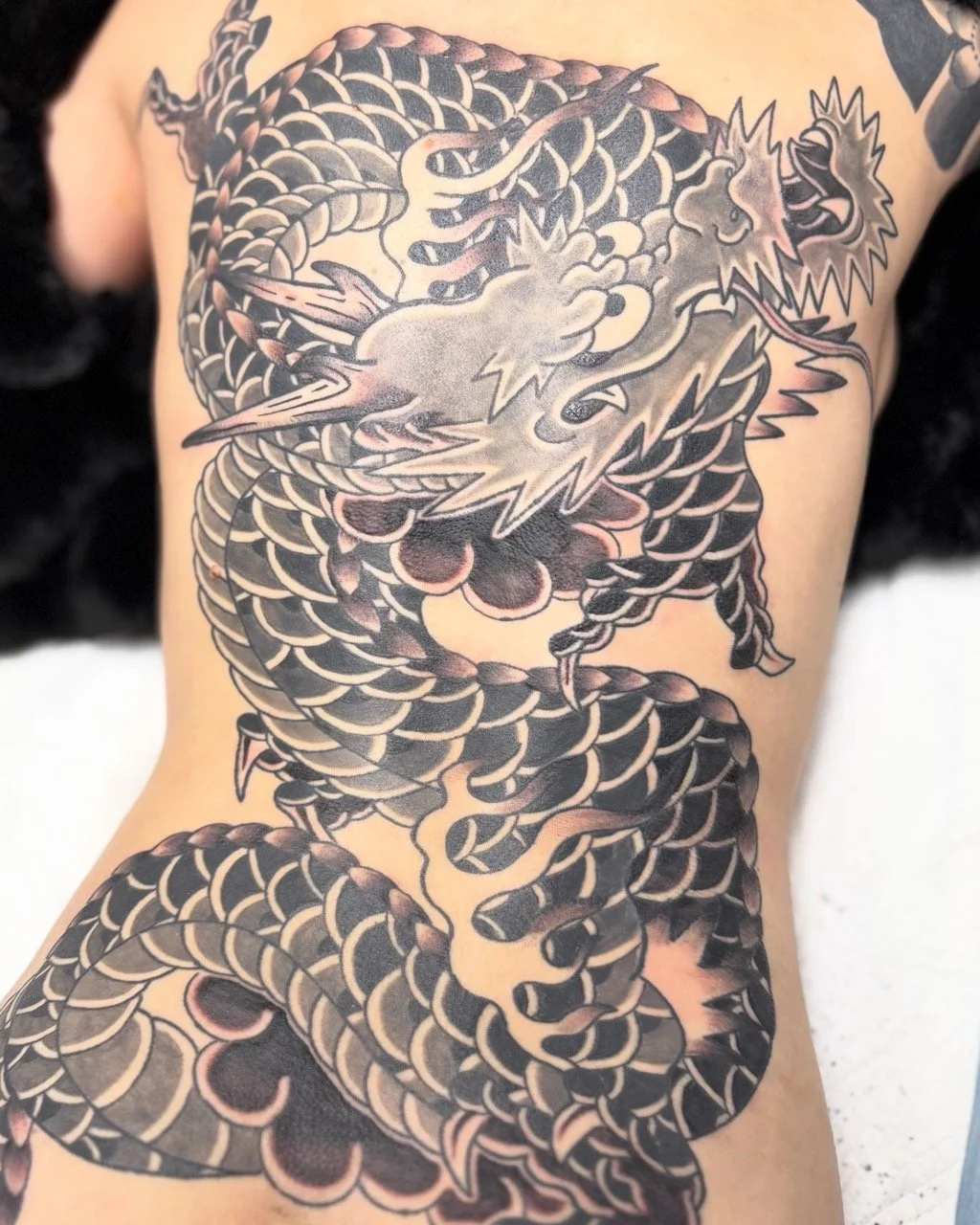
Freshly finished traditional Japanese dragon tattoo. Japanese female back piece done by Horiyama, Auckland New Zealand
Building a Japanese Bodysuit One Piece at a Time
One of my favourite things about working on large-scale Japanese tattoos is seeing a collection of pieces gradually develop into a cohesive bodysuit.
Emma started with a sleeve featuring her two cats and cherry blossoms. We then moved on to her dragon backpiece, and next year we’ll continue with her other sleeve, featuring a snake and sakura.
I love that her tattoos incorporate subjects that are personally meaningful to her while maintaining the visual language of Japanese tattooing.
A Japanese bodysuit doesn’t have to be completed all at once. Many clients build their tattoos over several years, working on individual sleeves, backpieces and other areas as time and budget allow.
The important thing is to consider the bigger picture from the beginning. Even when different areas are completed at different times, thoughtful planning helps the tattoos sit together naturally as the bodysuit develops.
Whether you’re interested in a Japanese dragon backpiece, a full sleeve or a larger irezumi project, having a clear design direction can make all the difference.
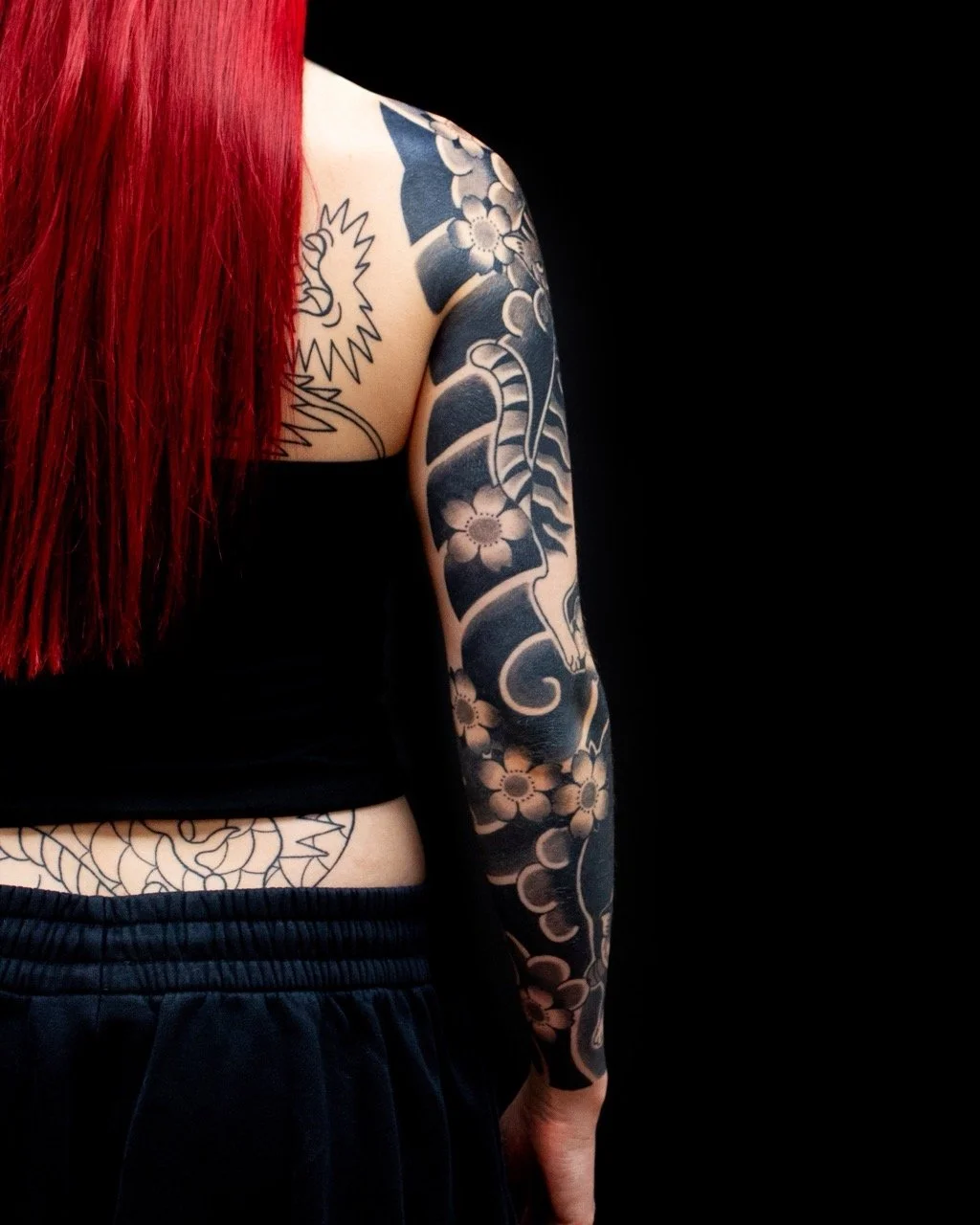
Japanese full sleeve with cats and cherry blossoms. Japanese dragon back piece in progress. Done by tattoo artist Horiyama. Auckland, New Zealand
Thank You Emma
Emma, thank you so much for trusting me with another significant piece of your Japanese bodysuit. You’re an amazing client, and I have so much respect for your commitment and bravery throughout these sessions.
I’m incredibly grateful for the opportunity to work with you, and I’m looking forward to continuing your bodysuit with the snake and sakura sleeve next year.
Thank you for travelling to Auckland to get tattooed by me.
Looking for a Japanese Tattoo Artist in Auckland, New Zealand?
I’m Horiyama, a Japanese tattoo artist based in Auckland, New Zealand, specialising in traditional Japanese tattooing, irezumi, large-scale Japanese bodysuits and one-point tattoos.
My approach focuses on composition, movement, balance and the relationship between the tattoo and the body. Whether you’re considering a Japanese dragon backpiece, a black and grey Japanese tattoo sleeve or a complete bodysuit, I’m happy to discuss your ideas and help develop a design suited to you.
If you’re looking for a Japanese tattoo artist in Auckland and are interested in starting your own irezumi project, I’d love to hear from you.
For bookings and enquiries:
Email: horiyama.tattoo@gmail.com
Website: www.horiyama.co.nz
Based in Auckland, New Zealand.
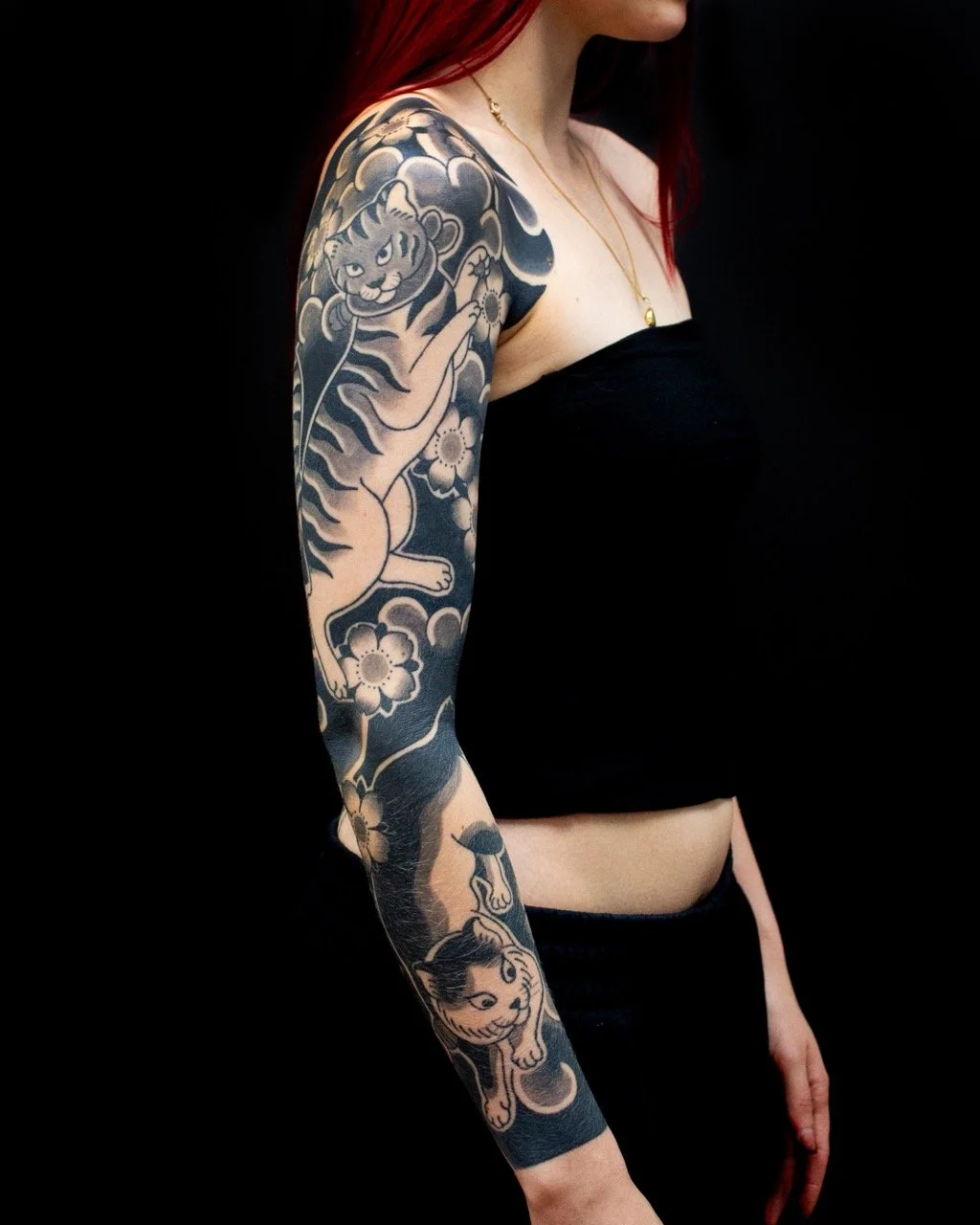
Japanese female full sleeve. Black and grey cats and cherry blossoms. Done by tattoo artist Horiyama. Auckland New Zealand