The Chrysanthemum in Japanese Tattooing: The Meaning of Kiku
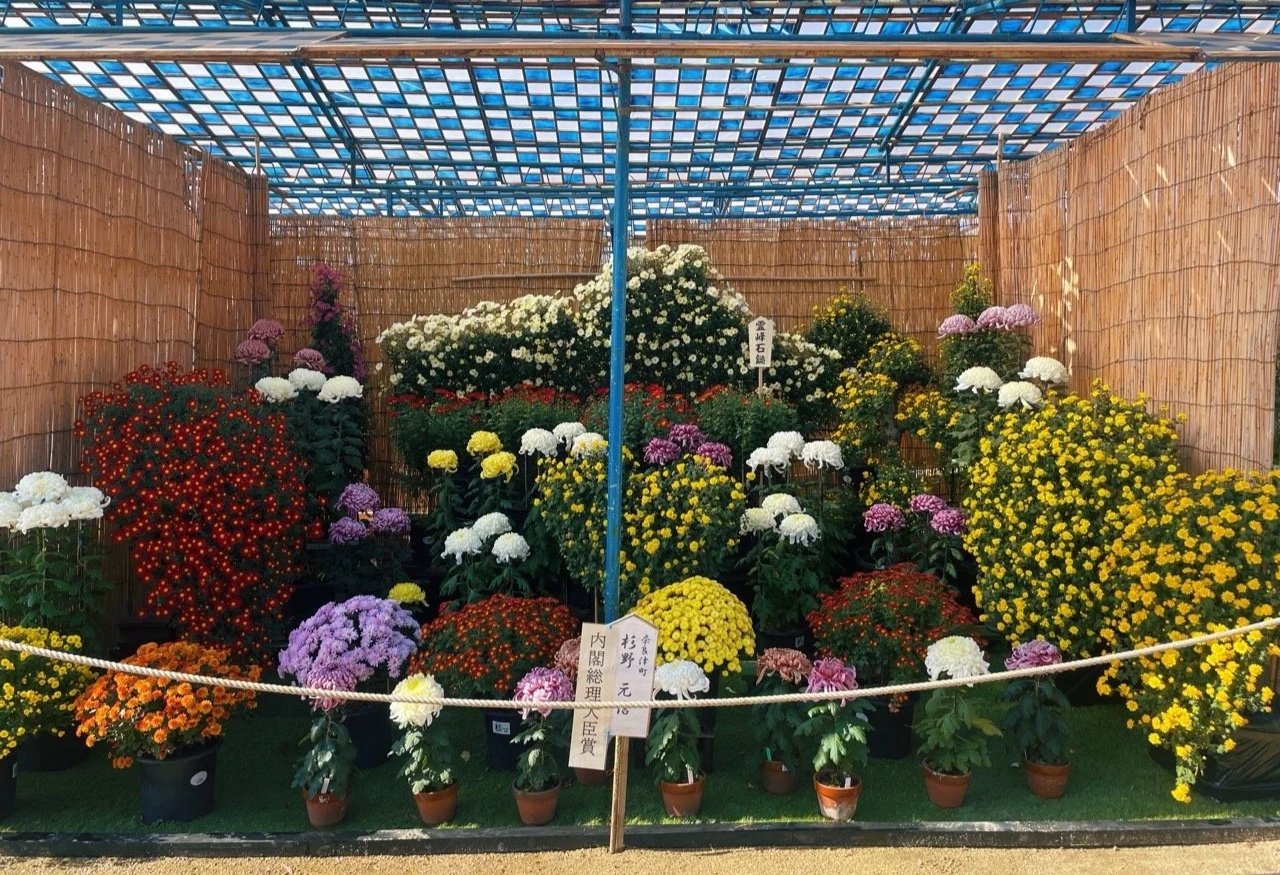
Fukuyama castle - November 2023 - Chrysanthemum show (photo taken by Horiyama)
From imperial symbolism and autumn traditions to funerals, food and one of the most recognisable flowers in Japanese tattooing, the chrysanthemum carries far more meaning than its beautiful petals might suggest.
Lately I’ve been tattooing a lot of chrysanthemums, or kiku (菊), so it felt like the perfect time to take a closer look at this incredibly important flower in Japanese tattoo, art and culture.
In traditional Japanese tattooing, chrysanthemums are one of the most recognisable floral motifs. They can be used as a major subject on their own, woven around a larger figure, or used throughout a composition to bring rhythm, movement and balance to the design.
But what does the chrysanthemum actually represent?
The meaning of the chrysanthemum
The chrysanthemum is strongly associated with longevity, endurance, nobility and autumn.
Part of this symbolism comes from the flower itself. Chrysanthemums bloom later in the year, continuing to flower as the weather becomes colder and many other plants begin to fade. In Japanese and wider East Asian culture, this has contributed to associations with resilience, dignity and enduring beauty.
Japanese government cultural material also describes the chrysanthemum as a symbol of Japan and notes that, in the Japanese language of flowers, it represents qualities such as nobility and a high-minded or lofty character.
There is also a long-standing association between chrysanthemums and longevity. One of the most beautiful stories connected to the flower is the legend of Kiku-Jidō, in which chrysanthemum dew is connected with an extraordinarily long life. This is one reason the flower can take on an especially meaningful role when longevity, perseverance or the wish for a long life is important to the person wearing it.
For a tattoo, this makes kiku particularly versatile. It can represent strength through difficult periods, enduring beauty, longevity, or simply an appreciation for one of Japan’s most important flowers.
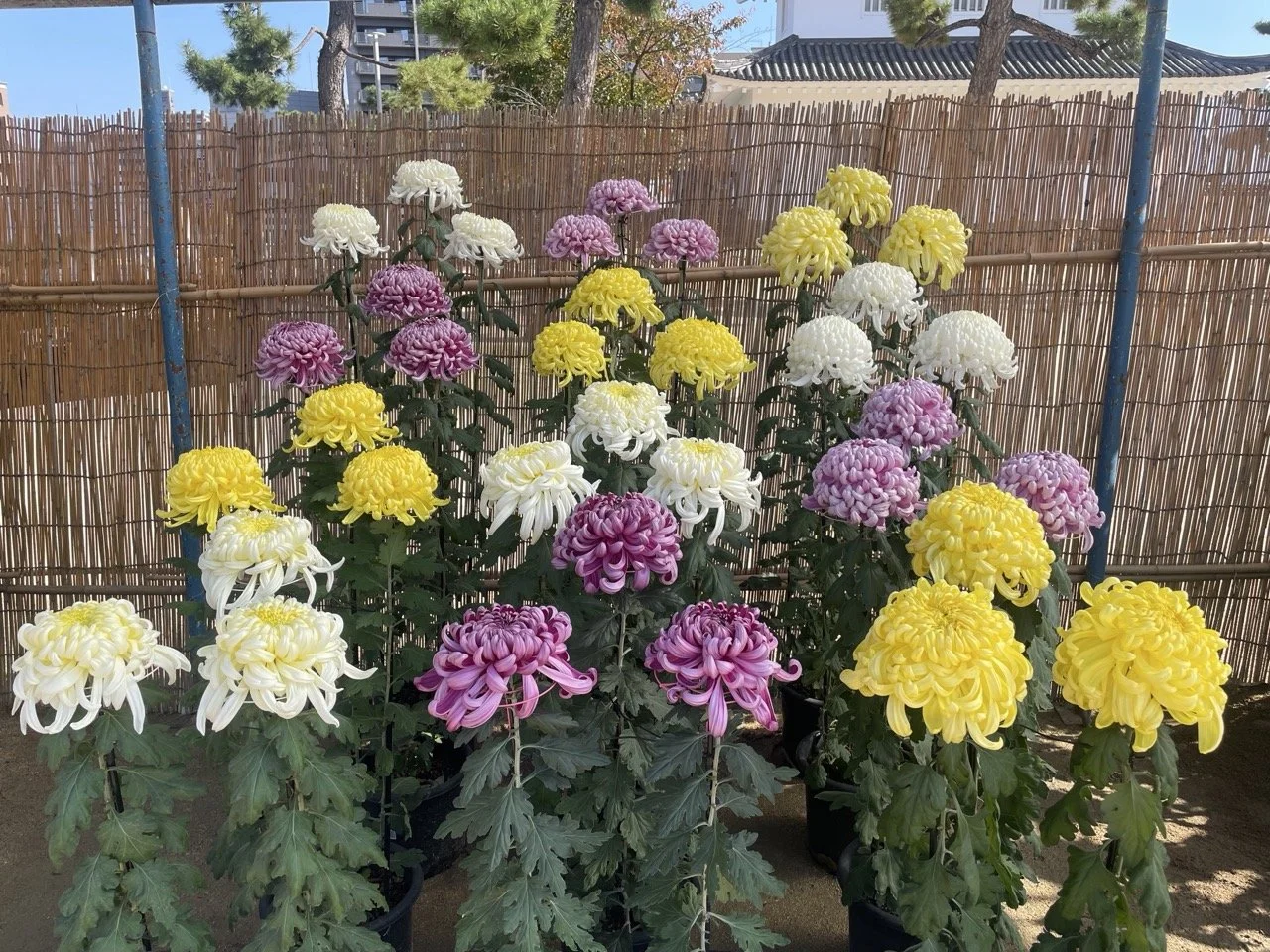
Fukuyama castle - November 2023 - Chrysanthemum show (photo taken by Horiyama)
Is the chrysanthemum really Japan’s national flower?
You’ll often hear the chrysanthemum described as Japan’s national flower, but technically this is a little more complicated.
Japan does not have an officially designated national flower. Instead, the chrysanthemum has become one of the country’s most recognisable traditional symbols.
Its connection to the Imperial Family is particularly important. The Imperial Household uses the sixteen-petal chrysanthemum crest, and the flower has long been associated with the Japanese imperial institution.
You can even see the chrysanthemum on the front of a Japanese passport.
The reason is slightly different from what you might expect. Japan does not have a legally designated national emblem, so the chrysanthemum has traditionally been used on the passport as a symbol representing Japan. Interestingly, the chrysanthemum on the current passport is not the exact same design as the Imperial Family’s crest: the imperial crest features sixteen petals with additional overlapping petals, while the passport uses a simpler single chrysanthemum.
So while calling it “Japan’s national flower” is common, it is more accurate to describe the chrysanthemum as a traditional national symbol and the flower associated with the Imperial Family.
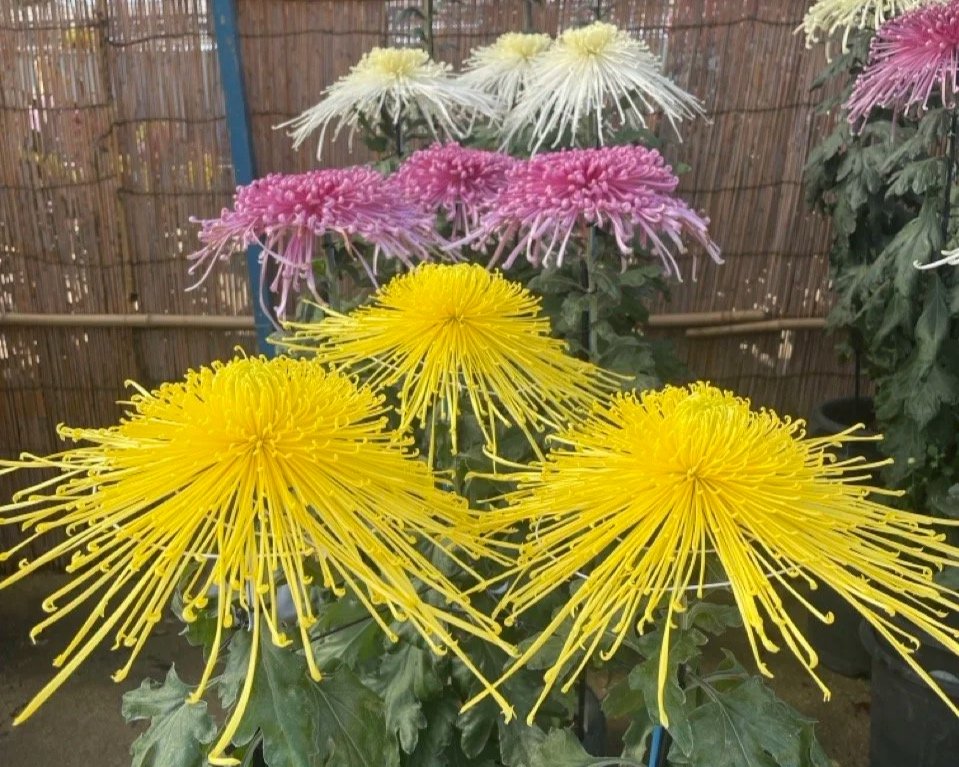
Fukuyama castle - November 2023 - Chrysanthemum show (photo taken by Horiyama)
Why are chrysanthemums used at Japanese funerals?
For anyone familiar with Japan, one of the first places you may notice chrysanthemums is at a funeral.
White chrysanthemums in particular are commonly used as funeral flowers and for offerings. White flowers can represent purity and remembrance, while the chrysanthemum’s associations with dignity and longevity also make it appropriate for paying respects to someone who has died.
There is also a practical side to the tradition. Chrysanthemums are hardy, widely available and tend to hold their appearance for a relatively long time. Their durability and ability to last as a cut flower are practical reasons they became useful for arrangements and offerings
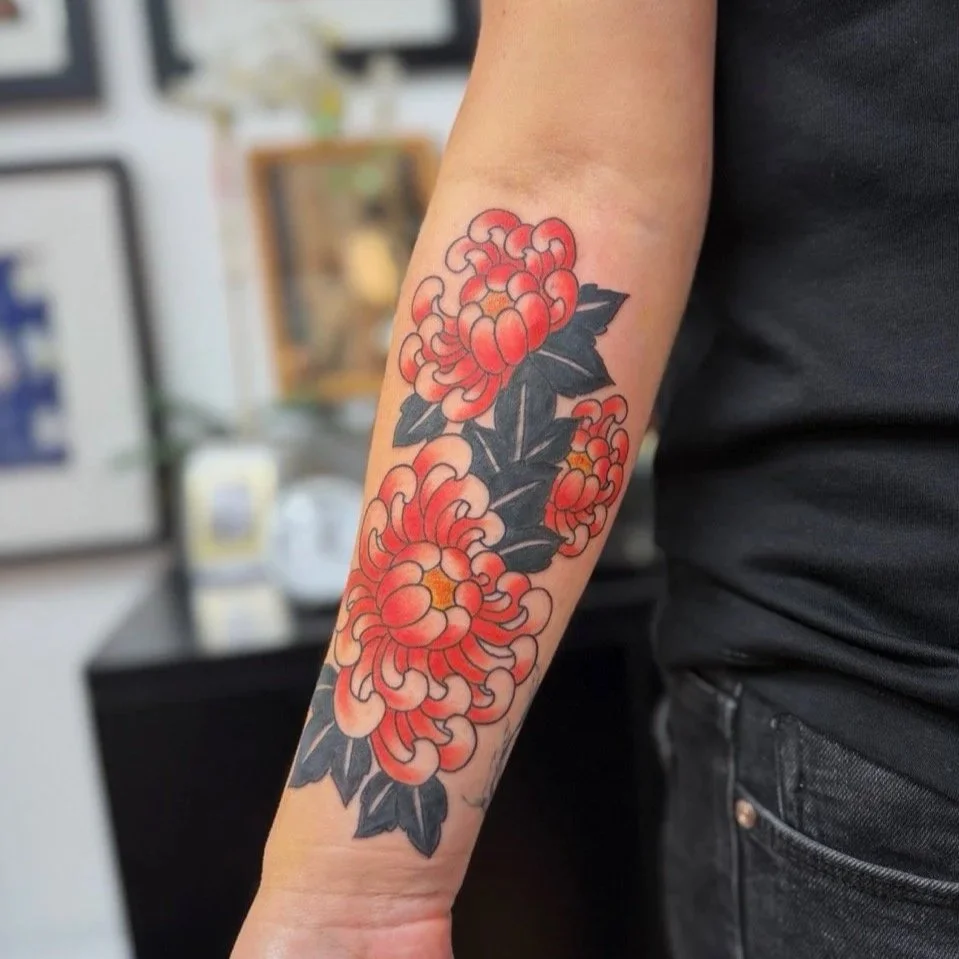
Chrysanthemum Kiku Japanese tattoo done by Horiyama. Auckland, New Zealand
Chrysanthemum and dragon tattoo meaning
Chrysanthemums are one of the flowers that work particularly beautifully with a Japanese dragon Irezumi tattoo.
A dragon, or ryū (龍), is associated with power, protection, wisdom and the forces of nature, particularly water, rain and clouds. When paired with a chrysanthemum, the composition brings together two very different types of strength.
The dragon gives the design movement, power and presence, while the chrysanthemum brings qualities of longevity, endurance and refinement.
That is part of what makes traditional Japanese tattooing so interesting. The flower isn’t simply there to make the dragon look better. Its season, shape, movement and symbolism all contribute to the overall design.
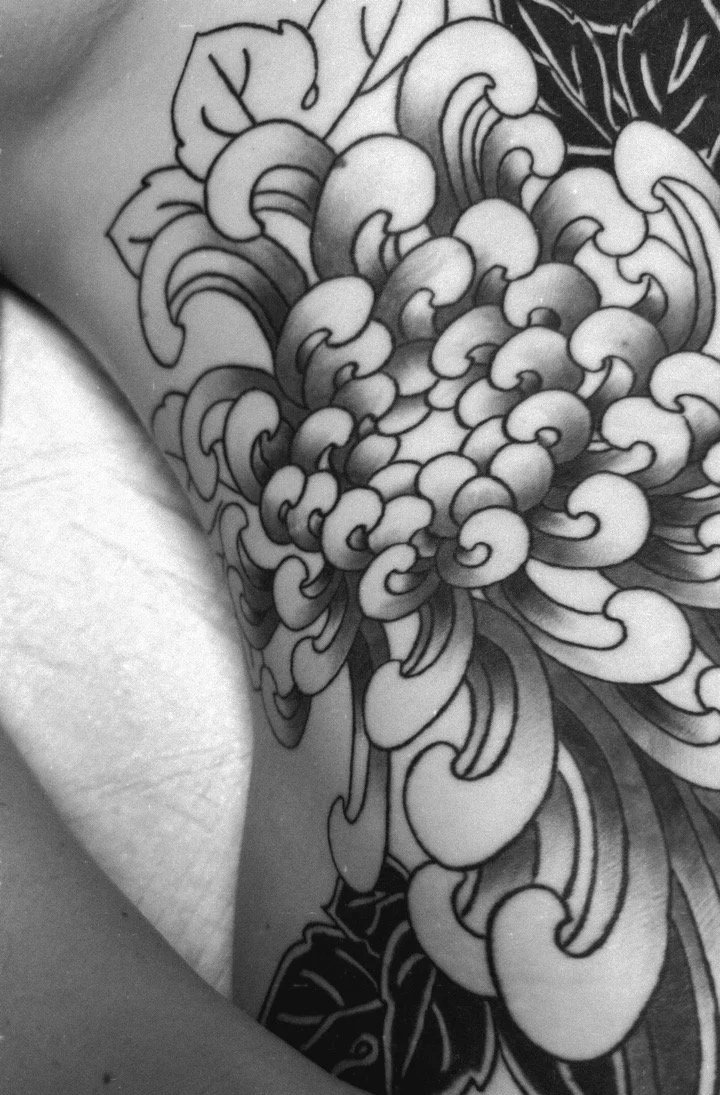
Black and grey Japanese chrysanthemum tattoo. Irezumi done by Japanese artist Horiyama. Auckland, New Zealand
Chrysanthemums among water irezumi
When chrysanthemums are paired with flowing water, there is an especially interesting connection to the idea of longevity.
One traditional motif is known as kikusui (菊水), literally “chrysanthemum water”. It depicts chrysanthemums floating with or beside flowing water and is connected to the Kiku-Jidō legend, in which dew from chrysanthemum petals is associated with an exceptionally long life.
Because of this, chrysanthemum and water can create a particularly strong visual expression of longevity, renewal and the continuation of life.
Water also gives the flower a completely different sense of movement. Instead of sitting statically within the composition, the chrysanthemums can appear to be carried along by the current, making the whole design feel more alive.
This is one of the reasons background (gakubori) is so important in Japanese tattooing. The water isn’t simply filling empty space — it can change the feeling and meaning of the entire composition.
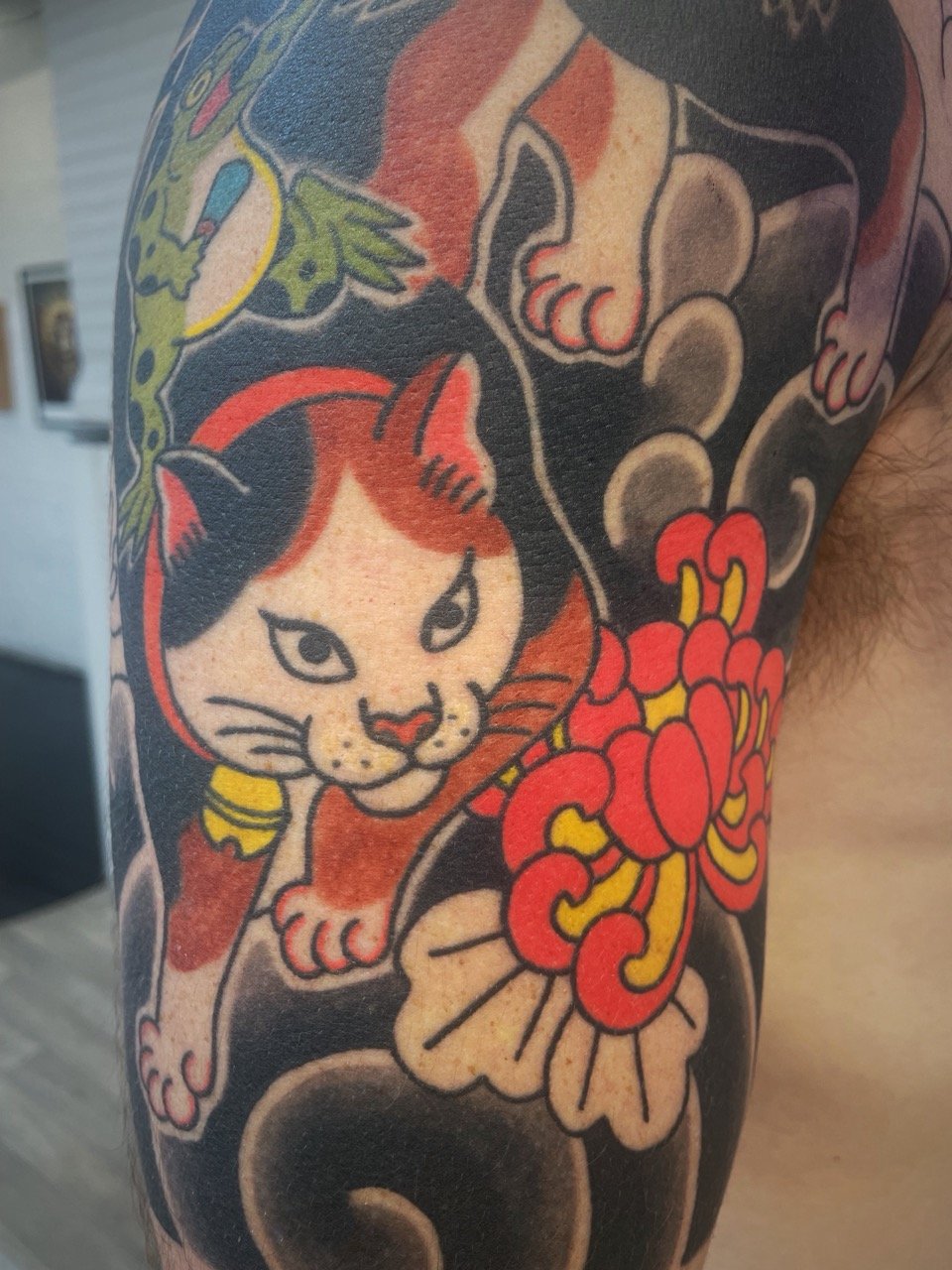
Cat and chrysanthemum sleeve in progress. Traditional Japanese Irezumi. Done by Japanese tattoo artist Horiyama. Auckland, New Zealand
Kiku beyond Japanese tattooing
The chrysanthemum isn’t only important because it looks beautiful in Japanese art. It has also been part of food and drink culture across East Asia for centuries.
Chrysanthemum tea is particularly well known in China and Korea. Dried chrysanthemum flowers are steeped in hot water to make a fragrant, naturally caffeine-free floral infusion. In Korea, it is known as gukhwacha, and chrysanthemum tea has a long history as part of traditional flower-tea culture.
Japan also has a tradition of eating chrysanthemums.
Yamagata Prefecture is particularly famous for edible chrysanthemums, where the petals are eaten in dishes such as ohitashi, vinegar-based dishes and tempura. Chrysanthemum petals can also be used alongside other vegetables and mushrooms, and are sometimes served as a garnish. The tradition of eating chrysanthemum petals in Yamagata dates back to the Edo period.
Chrysanthemums have also traditionally been used in other East Asian food and drink cultures, including chrysanthemum wine and seasonal dishes. In Korea, for example, chrysanthemums have been used to make both chrysanthemum liquor and pancakes.
It is fascinating that the same flower can appear on a passport, in an imperial crest, at a funeral, in a cup of tea and across the body as one of the most recognisable motifs in Japanese tattooing.
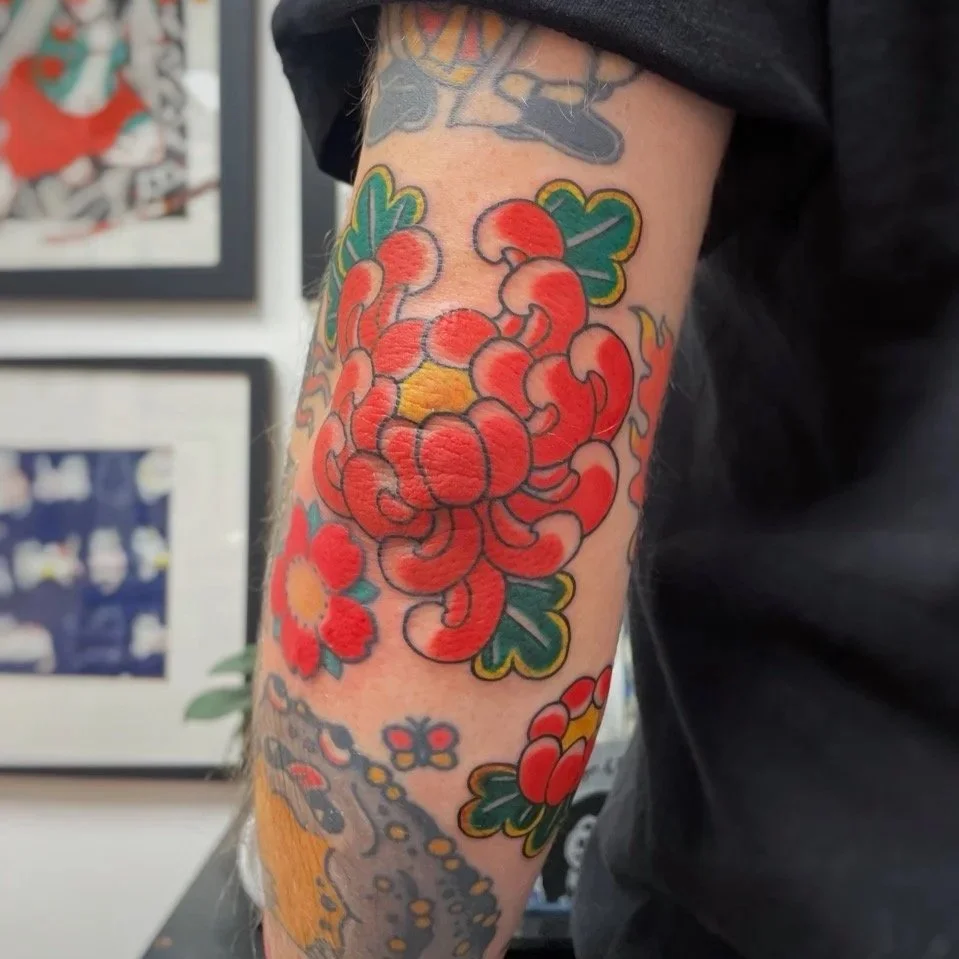
Japanese chrysanthemum elbow tattoo. Traditional Kiku flower tattoo done by Japanese tattoo artist Horiyama. Auckland, New Zealand
Why I love chrysanthemums in Japanese tattooing and Irezumi
For me, one of the best things about the chrysanthemum is its versatility.
The flower can be soft and elegant or bold and powerful depending on how it is drawn. Its many petals create beautiful movement and allow for a huge amount of variation in shape, size and colour.
It can sit quietly behind a larger subject or become a major focal point in its own right.
And when it is combined with other traditional Japanese imagery — whether that is a dragon, water, clouds, maple leaves or another subject — it becomes part of a much larger visual language.
That is what makes a chrysanthemum much more than simply a pretty flower in Japanese tattooing.
If your thinking about getting a Japanese irezumi tattoo in Auckland, New Zealand, feel free to contact me through the contact form page and I would be more than happy to help and give you advice on your next project. Thank you for reading.