A Little Luck Goes a Long Way: Good Fortune in Japanese Tattooing
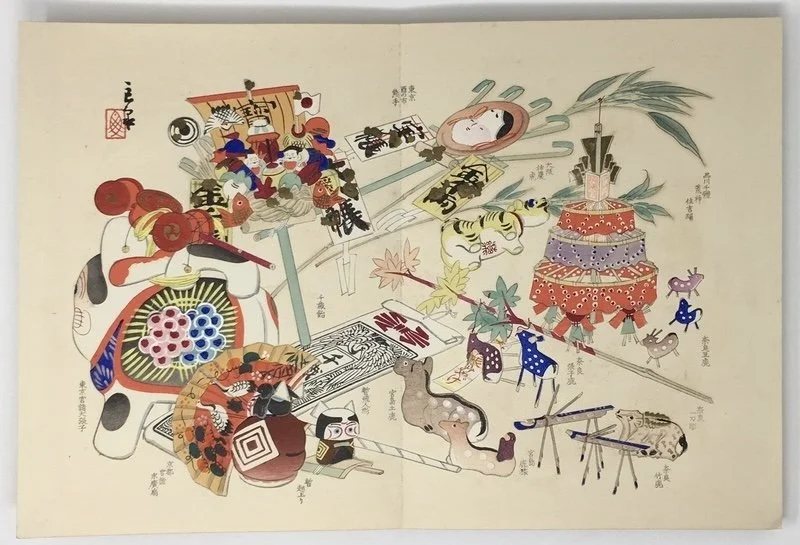
Japanese Toys - Twelve Monthsby Kawasaki Kyosen. Osaka. Darumaya Shoten. 1926.
I recently finished a lucky charm leg sleeve, which got me thinking about just how many different symbols of good fortune appear in Japanese art and tattooing.
Japan has a long tradition of engimono (縁起物), objects, figures and symbols associated with good luck, prosperity, protection and positive fortune. Many of these can be found everywhere from temples and shrines to shops, homes, kimono, woodblock prints and traditional Japanese decorative arts.
They also make fantastic tattoo designs. Whether you’re looking for a small one-point tattoo or something to incorporate into a larger Japanese sleeve or bodysuit here are some inspirations below.
Maneki neko - the lucky cat
Perhaps the most recognisable Japanese lucky charm is the maneki-neko (招き猫), or beckoning cat.
With one paw raised, the cat is inviting good fortune towards itself. Traditionally, the raised left paw is associated with attracting people and customers, while the right is associated with money and good fortune. Maneki-neko are often shown holding a koban, an old Japanese gold coin.
There are several stories surrounding the origins of the maneki-neko, including the famous legend of Gotokuji Temple in Tokyo, where a cat is said to have beckoned a passing lord to safety and in doing so, he avoided being struck by a lightning bolt.
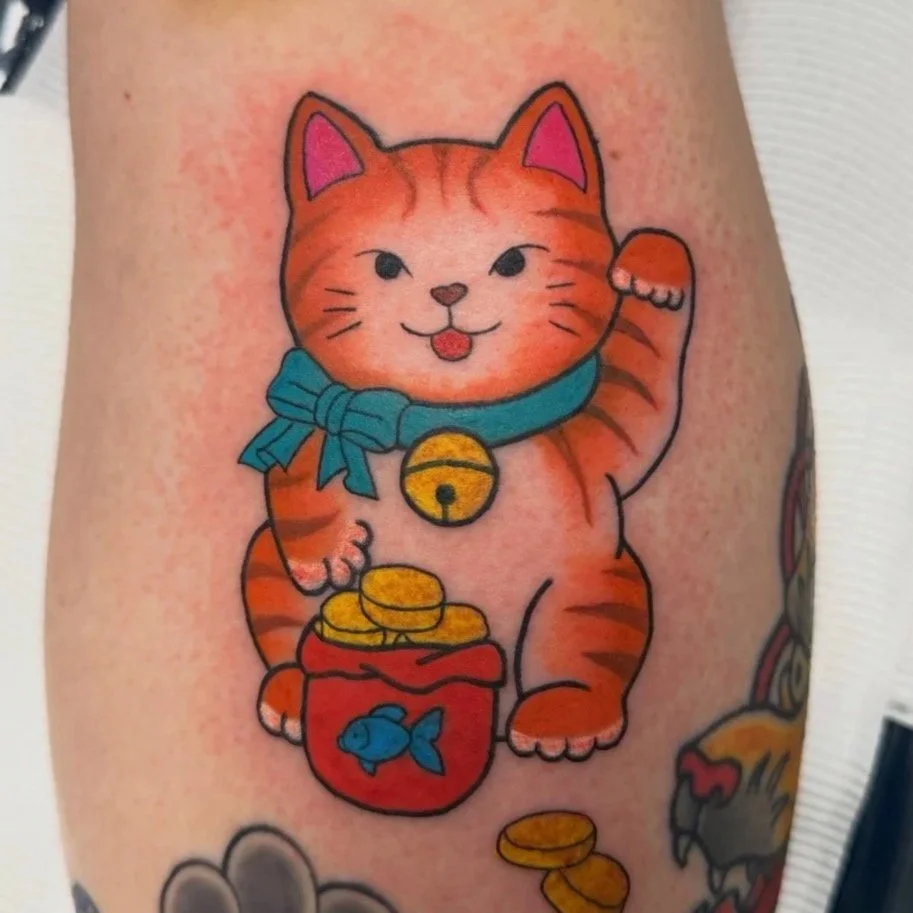
Japanese money cat tattoo done by Horiyama. Auckland, NZ
Daruma- perseverance and achieving your goals
The Daruma is instantly recognisable by its round shape, fierce expression and usually bright red colour.
Daruma represents perseverance, determination and achieving your goals. Traditionally, one eye is painted when a goal is made and the second is filled in when the goal is achieved. Its rounded shape is designed to right itself when knocked over, representing the idea of falling down and getting back up again.
Daruma are based on Bodhidharma, the Indian monk traditionally associated with the beginnings of Zen Buddhism in China. The Daruma we recognise today developed in Japan, particularly around Takasaki in Gunma Prefecture.
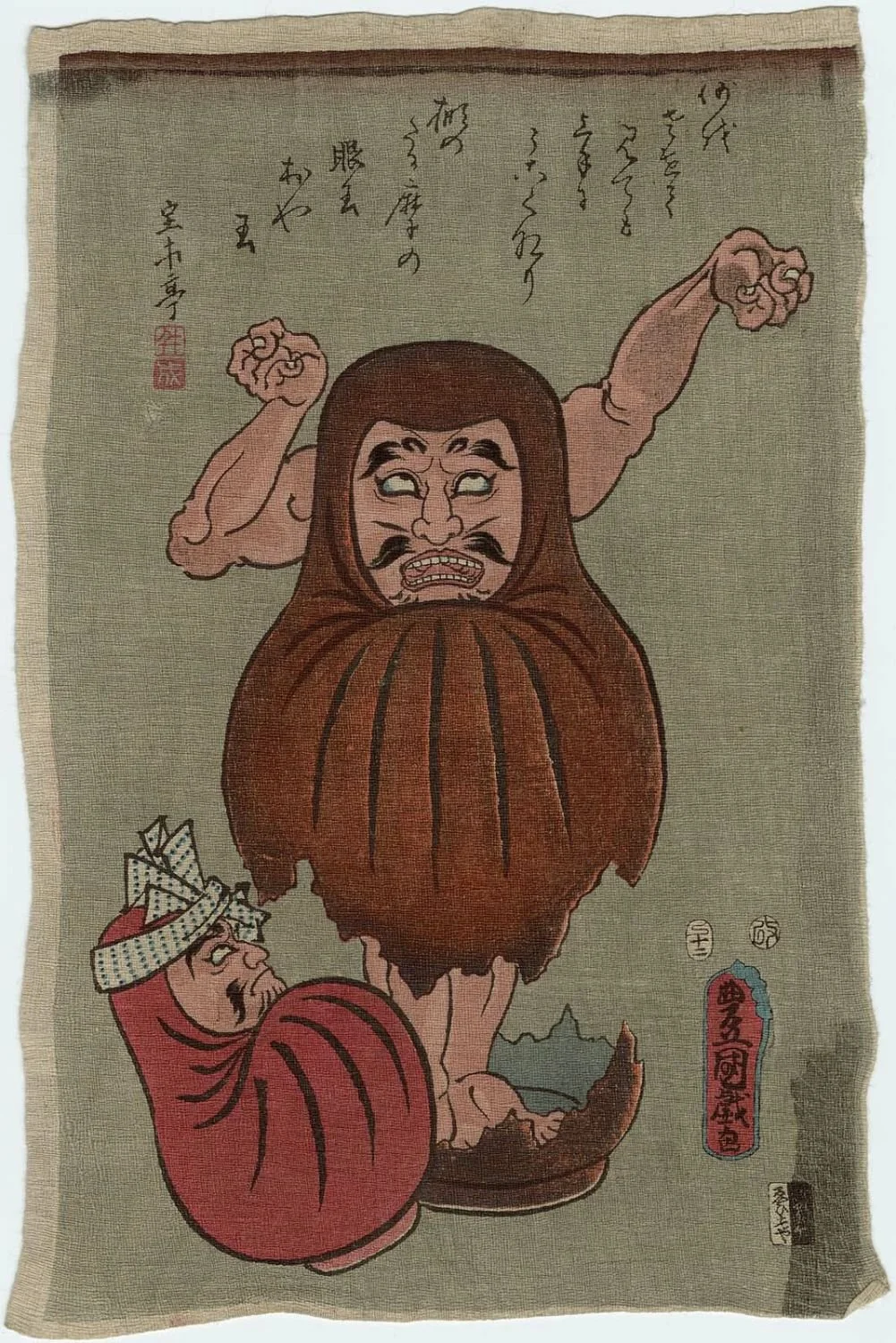
Mori Darumaan Collection, Daruma Caricature, Bored Daruma - Edo-Tokyo Museum
Omamori- protection and blessings
Omamori (お守り) are small protective charms traditionally purchased at Japanese Shinto shrines and Buddhist temples.
Different omamori are associated with different blessings, including health, safety, success, love, travel and prosperity.
Their simple fabric pouch shape can translate beautifully into a tattoo, especially when incorporated into a larger Japanese sleeve. Rather than being an obvious symbol of luck, an omamori can feel like a private charm carried by the wearer.
Uchide no kozuchi - the lucky hammer
The uchide no kozuchi (打ち出の小槌) is a magical hammer from Japanese folklore. It is often shown with Daikokuten, one of the Seven Lucky Gods, and is said to produce whatever is wished for when swung.
Because of this, the lucky hammer represents wealth, abundance and wishes being fulfilled.
It is also a great small-scale tattoo motif, simple enough to work on its own but packed with meaning.
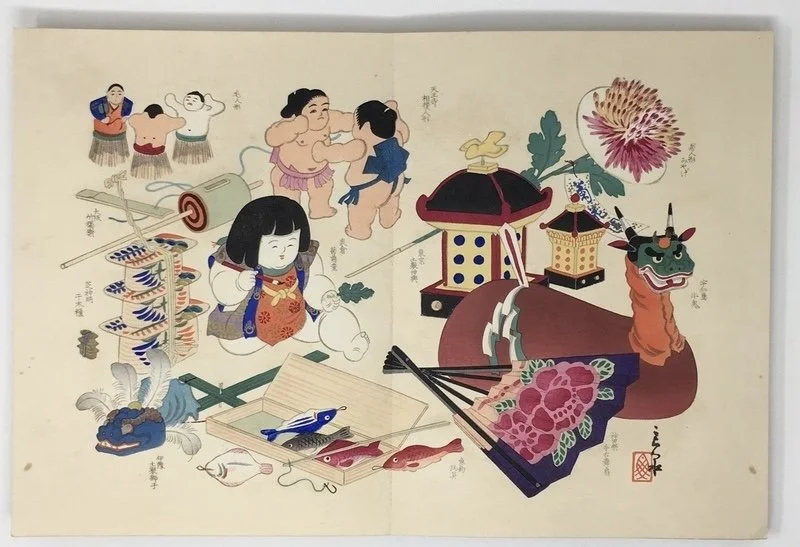
Japanese Toys - Twelve Monthsby Kawasaki Kyosen. Osaka. Darumaya Shoten. 1926.
Kinchaku- the money bag
The kinchaku (巾着) is a traditional drawstring pouch that was historically used to carry personal belongings and money.
As a decorative lucky motif, it represents wealth, prosperity and abundance. Money bags appear alongside other auspicious objects in Japanese takarazukushi, or “treasure gathering” designs.
Lucky coins and knotted cords
Coins are another natural symbol of wealth and prosperity. In traditional Japanese decorative art, coins are often combined with cords and other treasure motifs.
The circular shape of a coin makes it especially effective in Japanese tattoo compositions, and knotted cords can add movement and detail around objects such as money bags, coins and charms.
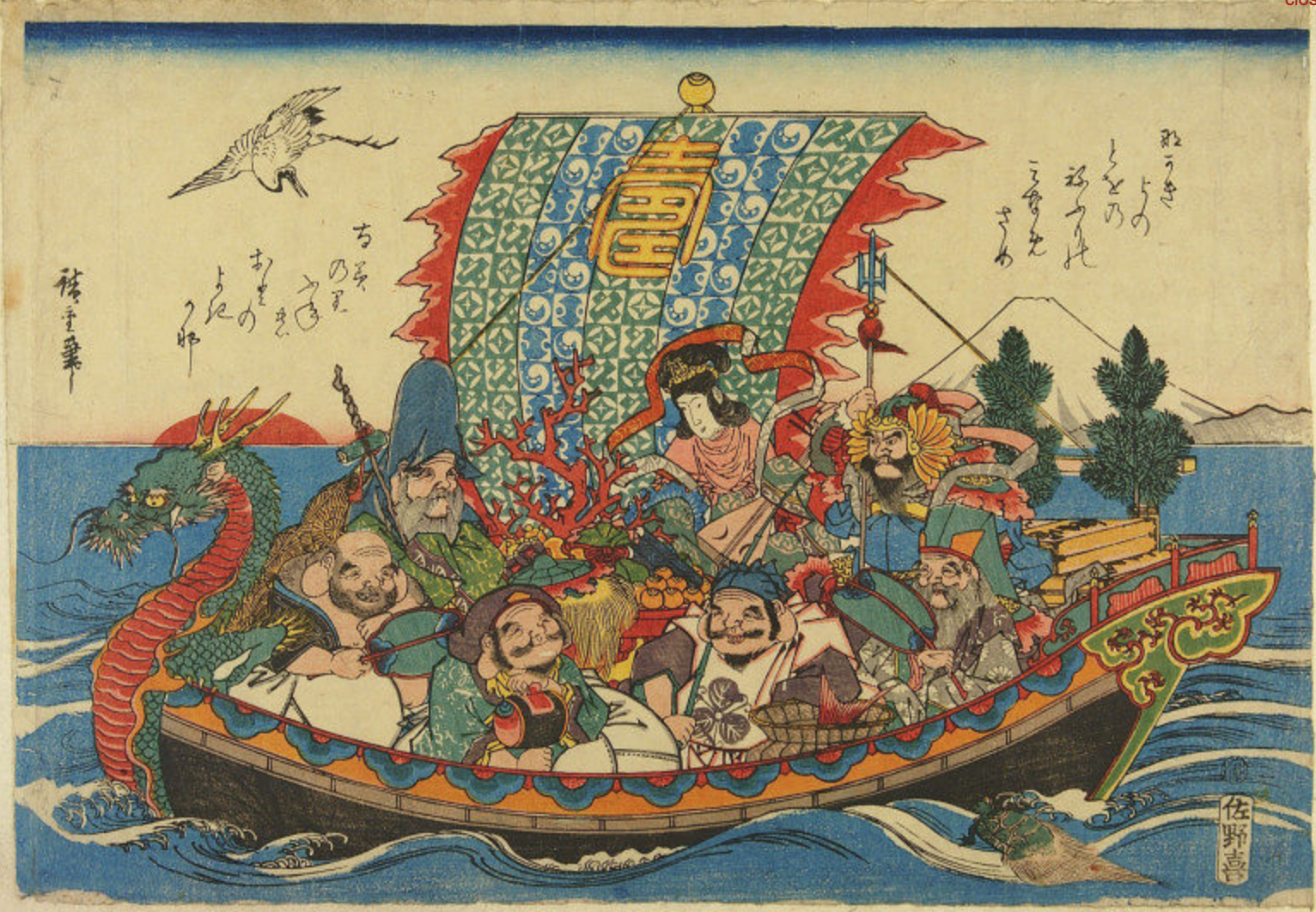
Seven lucky Gods - By Hiroshige (1797-1858 CE). Woodblock print
Takarabune - the Treasure Ship
One of my favourites is the takarabune (宝船), or Treasure Ship.
The ship traditionally carries the Seven Lucky Gods, along with a collection of treasures including the lucky hammer, money bags, scrolls and other auspicious objects. It became particularly associated with New Year celebrations and good fortune for the year ahead.
A treasure ship can be an incredible larger tattoo, but individual treasures from the ship can also be used as smaller one-point designs.
Kumade - the lucky rake
You may have seen kumade (熊手) displayed outside Japanese businesses, particularly around festivals and New Year.
Literally meaning “bear’s paw”, the rake is said to rake in good fortune and prosperity. They are often decorated with miniature lucky objects, making them almost like a collection of lucky charms in one.
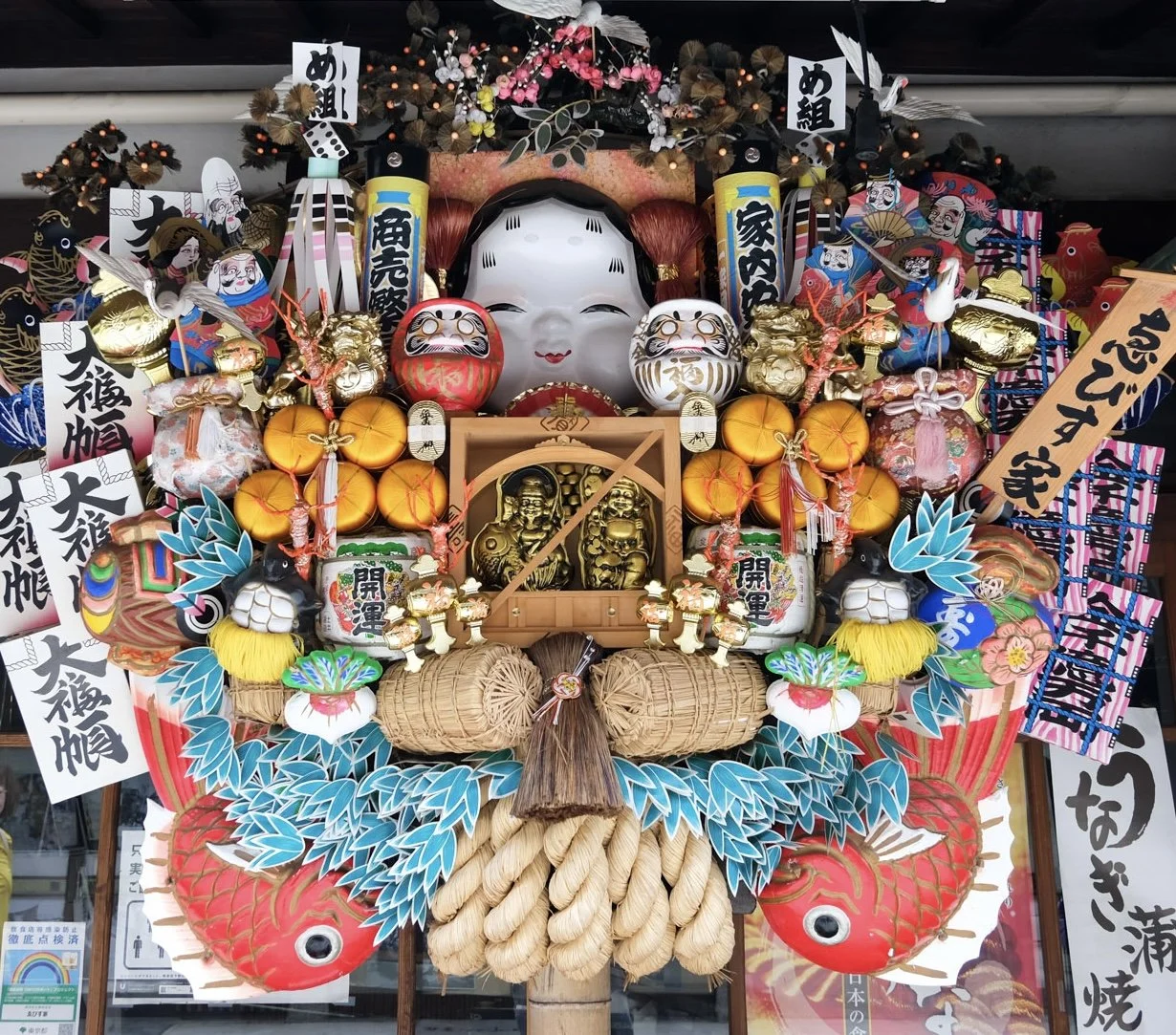
Kumade - the lucky rake Displayed outside a shop in Japan 🇯🇵
The Seven Lucky Gods
The Shichifukujin (七福神), or Seven Lucky Gods, are another important part of Japanese good-fortune imagery.
The group includes Ebisu, Daikokuten, Bishamonten, Benzaiten, Fukurokuju, Jurōjin and Hotei. Interestingly, their origins are mixed, drawing from Japanese traditions as well as Buddhism, Hinduism and Chinese Taoism
They are frequently depicted together aboard the Takarabune, bringing fortune into the new year.
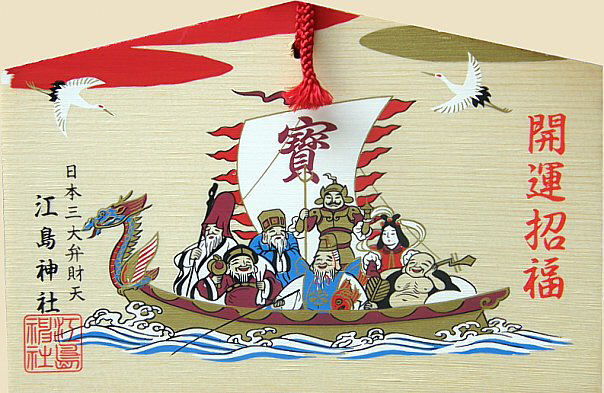
Scrolls and other treasures
Scrolls, jewels, coins, mallets and money bags can all appear together as part of takarazukushi, a collection of traditional auspicious “treasures.”
There are also many other Japanese symbols associated with good fortune, including cranes, turtles, koi, tanuki and pine, bamboo and plum. These aren’t necessarily “lucky charms” in the same way as an omamori or Daruma, but they carry their own long-standing meanings of longevity, perseverance, prosperity and good fortune.
Why lucky charms make great tattoos
What I love about these motifs is that they can be deeply personal without needing to be obvious.
A maneki-neko, Daruma or lucky hammer can make a great small one-point tattoo, while collections of charms can be incorporated into a larger Japanese sleeve or bodysuit.
In a larger piece, I particularly like the idea of placing a lucky charm somewhere slightly hidden within the composition. It can become a private symbol of good fortune for the wearer, something meaningful that doesn’t necessarily need to be seen by everyone else.
Japanese tattooing has always had a wonderful relationship with symbolism, and lucky charms give us another way to tell a story through imagery.
Sometimes the best kind of luck is the kind you carry with you.
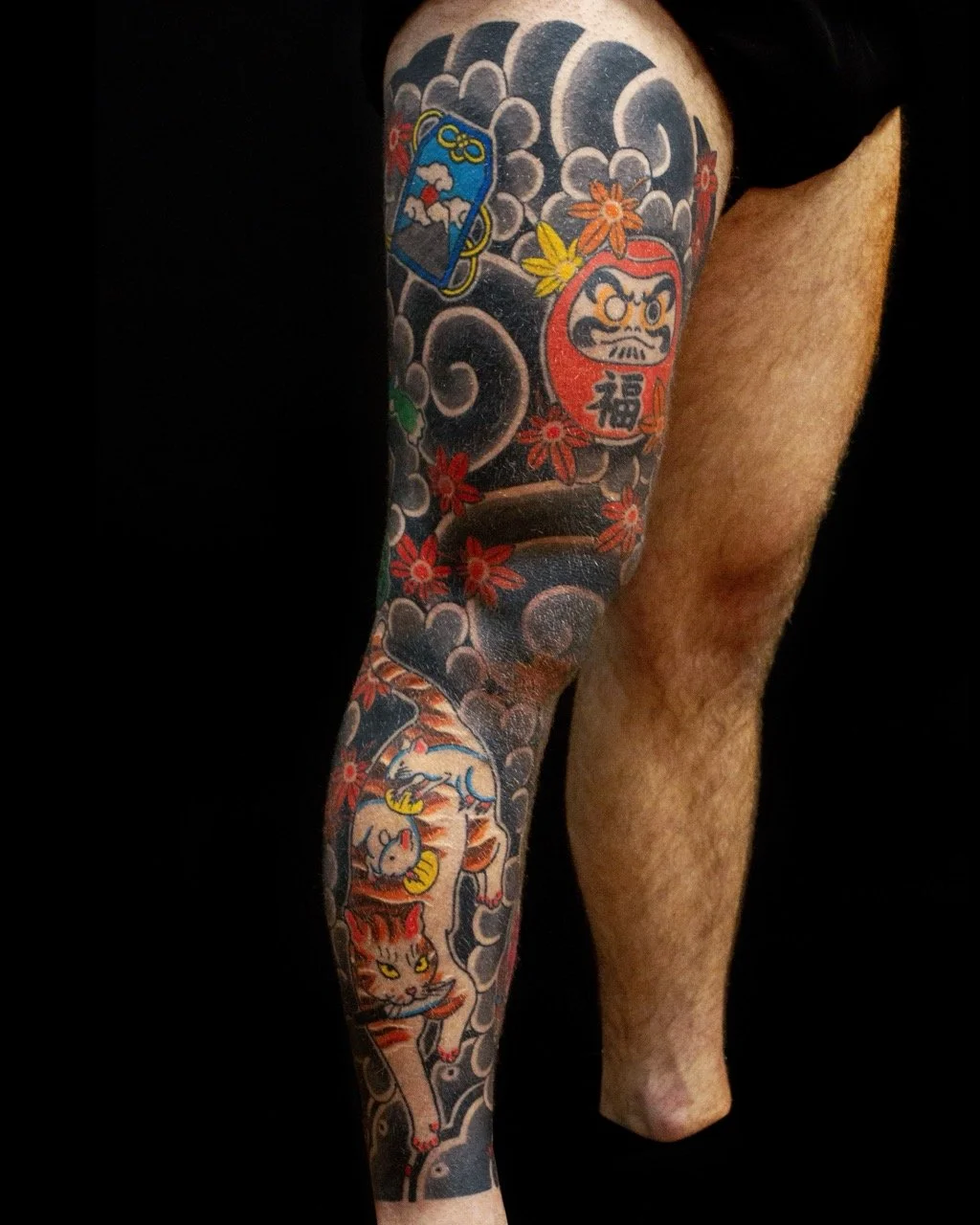
Traditional Japanese Irezumi Tattoo leg sleeve. Lucky charms and good fortune items. Done by Horiyama. Auckland New Zealand