Fukuoka: A City with Deep Roots in Japanese Tattoo Culture
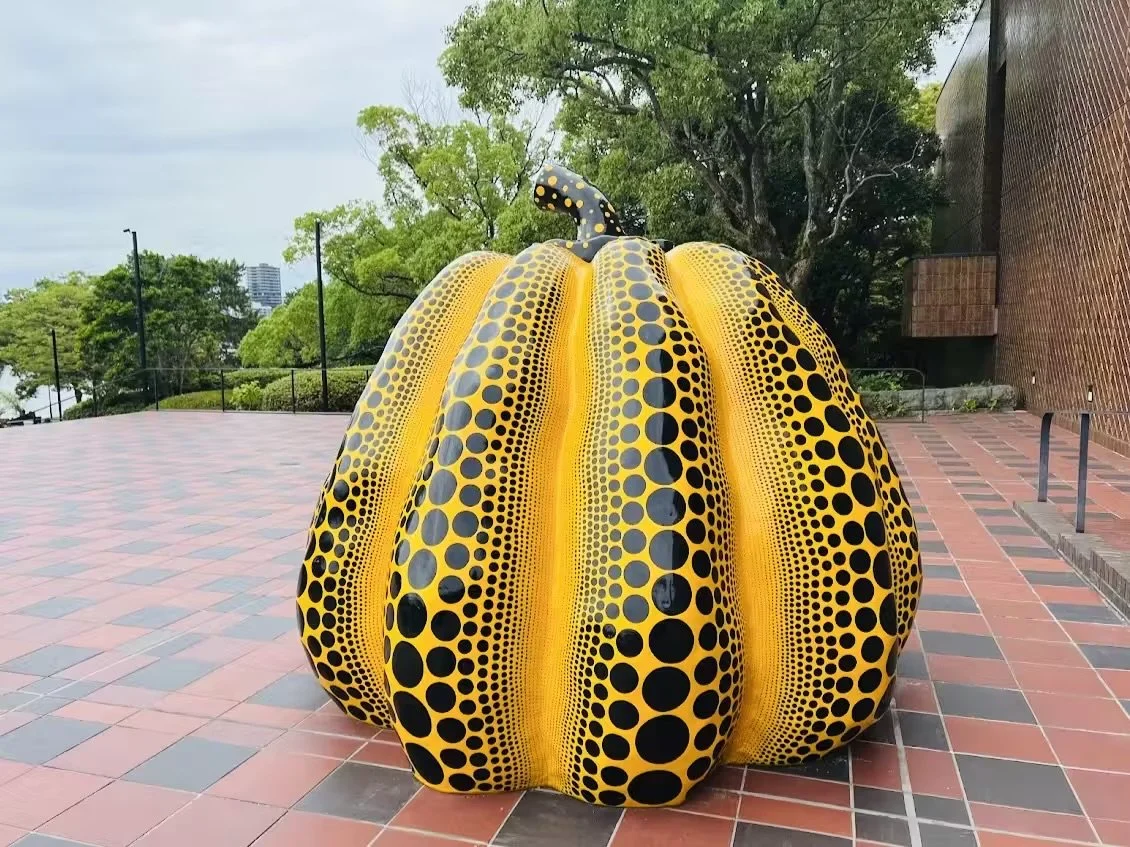
Yayoi Kusama's Pumpkin (1994): Located outside the Fukuoka Art Museum by Ohori Park, this striking yellow-and-black spotted pumpkin was the artist's very first outdoor public sculpture.
Today I dropped my little Honda Fit off to be repaired. She’s getting on a bit now, but she’s still going strong!
When I went to pick her up, I got chatting with my mechanic and found out that he’s from Fukuoka. His service was amazing, and the conversation actually gave me the inspiration for this week’s blog post.
I’ve visited Fukuoka a few times during my trips to Japan, and it’s a city I’ve always loved. It has a really unique atmosphere, relaxed and welcoming, but with such a deep history and connection to Japanese culture.
As a Japanese tattoo artist, I’m particularly fascinated by Fukuoka and the wider Kyushu region because of their connection to the history of tattooing in Japan.
Fukuoka: Japan’s Gateway to Asia
Fukuoka sits on the northern coast of Kyushu, facing towards Korea and the Asian mainland. Because of its location, the area around Hakata has been a centre of international exchange for thousands of years.
Hakata became an important trading port, with merchants travelling between Japan, China and Korea. By the late 11th century, it had developed into a major international trading centre.
This history of exchange is one of the things I find particularly fascinating about Fukuoka.
When we think about traditional Japanese culture, it can be easy to imagine Japan as an isolated country that developed completely independently. But Japanese art, religion, clothing, craftsmanship and design were influenced by centuries of exchange with the rest of Asia.
And that includes the history of tattooing.
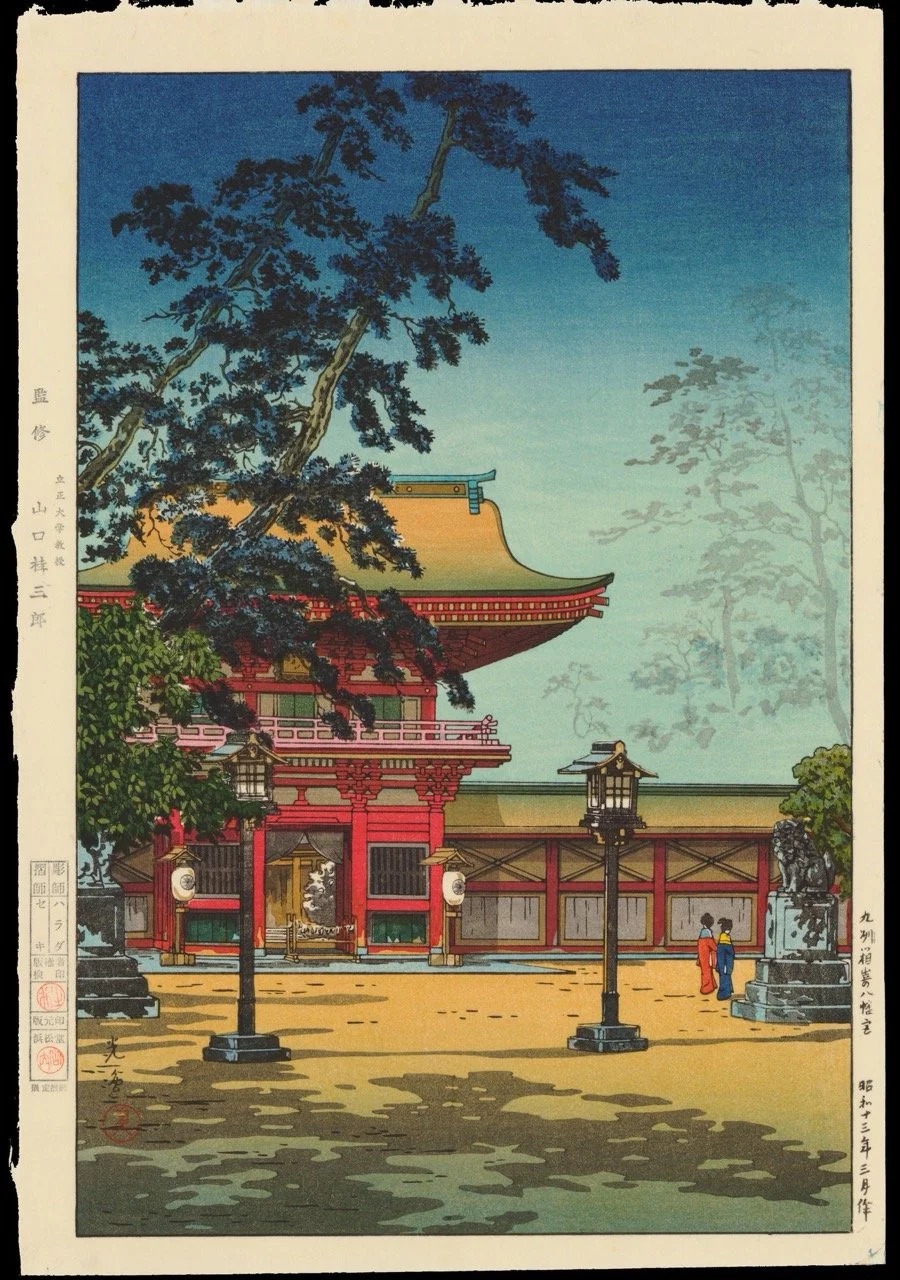
Japanese Print "Hakozaki Hachimangu Temple, Kyushu" by Tsuchiya Koitsu
Tattooing in Ancient Kyushu
Some of the earliest written references to tattooing in Japan are connected to Kyushu.
During the Yayoi period, Chinese visitors recorded observations of tattooing among people in Kyushu. These tattoos appear to have had spiritual, social and symbolic meanings.
This is particularly interesting when you consider how different the meaning of tattooing has been throughout Japanese history.
Tattooing was not always simply “good” or “bad”. Its meaning changed dramatically over thousands of years, from cultural and spiritual markings, to punishment, to the elaborate decorative tattooing that eventually developed into the Japanese tattoo traditions we recognise today.
A More Complicated Tattoo History
Fukuoka’s connection to tattooing has a darker side.
During the Edo period, Chikuzen, the region covering much of present-day Fukuoka, had its own system of tattoo punishment. Criminals could be marked on visible parts of the body, with specific designs used to identify their offence or the region where they had been punished. These tattoos were deliberately permanent and public, making the person’s punishment something they carried with them long after the sentence itself had ended.
It’s a striking contrast to the intricate irezumi we associate with Japan today, and an important reminder that the meaning of tattoos has changed dramatically throughout Japanese history.
Fukuoka and Traditional Japanese Art
Fukuoka is also a wonderful place to appreciate traditional Japanese craftsmanship.
Hakata is famous for Hakata-ori, a traditional woven textile whose techniques were introduced from China in the early 13th century. The fabric became particularly associated with obi and samurai clothing.
The region is also famous for Hakata dolls, traditional festivals, ceramics and other forms of craftsmanship.
This connection between Fukuoka, craftsmanship and cultural exchange is something I find especially fitting when thinking about tattooing.
There is a huge amount of thought behind the composition, symbolism, flow and placement of a Japanese tattoo. Like other Japanese crafts, the finished work is built on knowledge that has been passed down and refined over generations.
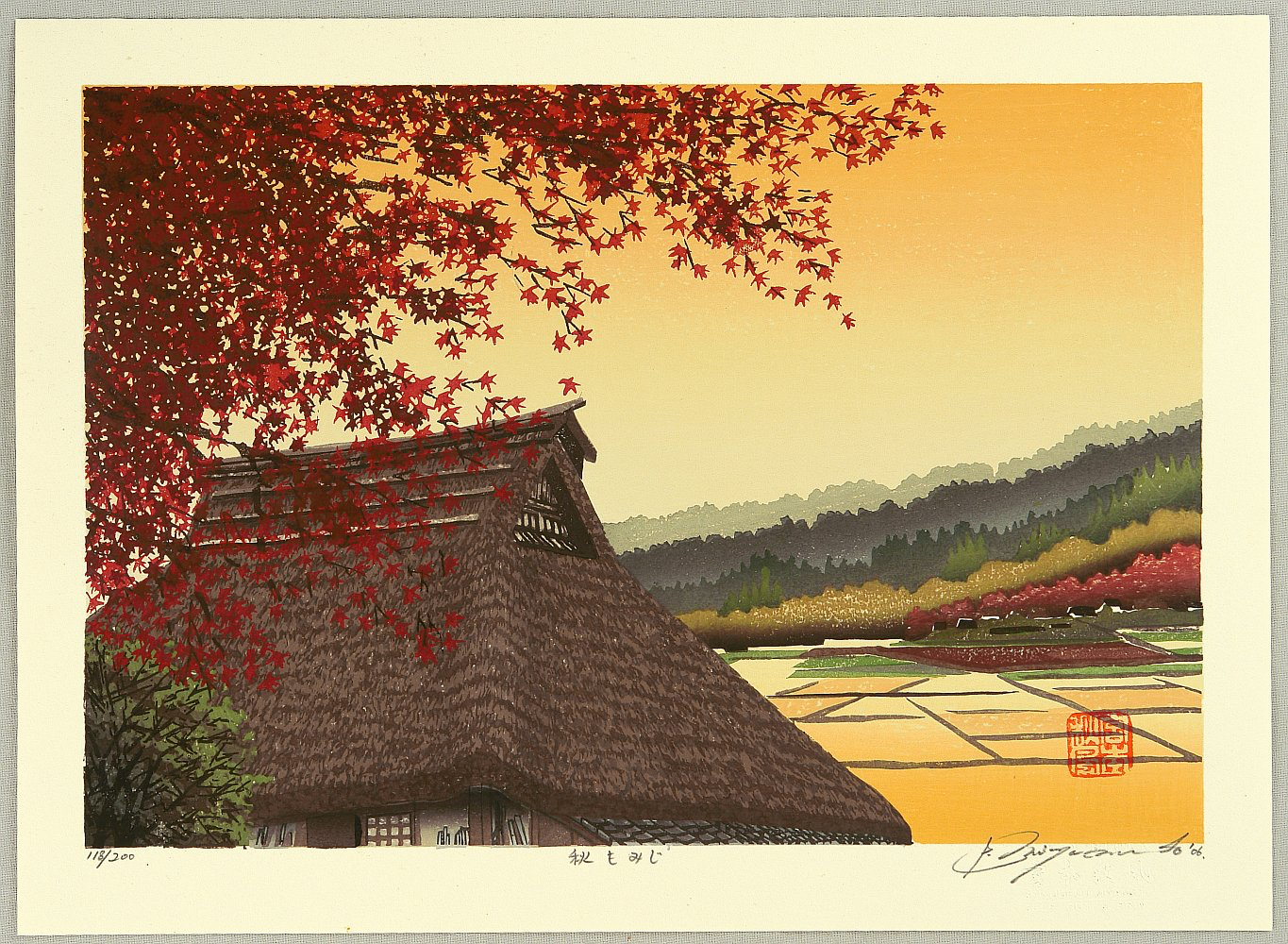
Shufu Miyamoto - Autum Coloured Maple. Shufu Miyamoto was born in 1950 in Fukuoka Prefecture, Japan. Miyamotois a contemporary Japanese printmaker known for refined woodblock prints with a strong focus on landscape subjects. His works often depict quiet natural scenes with a romantic atmosphere
Hakata Gion Yamakasa
One of the best examples of Fukuoka’s living culture is Hakata Gion Yamakasa, a festival held every July.
The festival has a history stretching back centuries and is centred around Kushida Shrine in Hakata.
The enormous decorated floats, elaborate costumes and powerful imagery are a reminder that traditional Japanese art isn’t something that only exists in museums.
It is still part of everyday life. That is something I love about Japan.
Why I Keep Going Back to Fukuoka
For me, Fukuoka is one of those cities that is easy to love.
It has incredible food, including tonkotsu ramen, fresh seafood and the famous Hakata yatai food stalls.
But beyond the food, I love the atmosphere.
Compared with some of Japan’s larger cities, Fukuoka feels more relaxed and approachable. It has the convenience of a major Japanese city without feeling overwhelming.
And knowing how much history is beneath the surface makes it even more interesting to me.
So when my mechanic told me he was from Fukuoka today, it was a funny little reminder of how often Japan seems to find its way back into my life.
And perhaps that’s why I enjoy tattooing Japanese Irezumi so much.
The more I learn about Japan, the more I realise there is always another layer of history, symbolism and craftsmanship to discover.
Fukuoka is a perfect example of that.
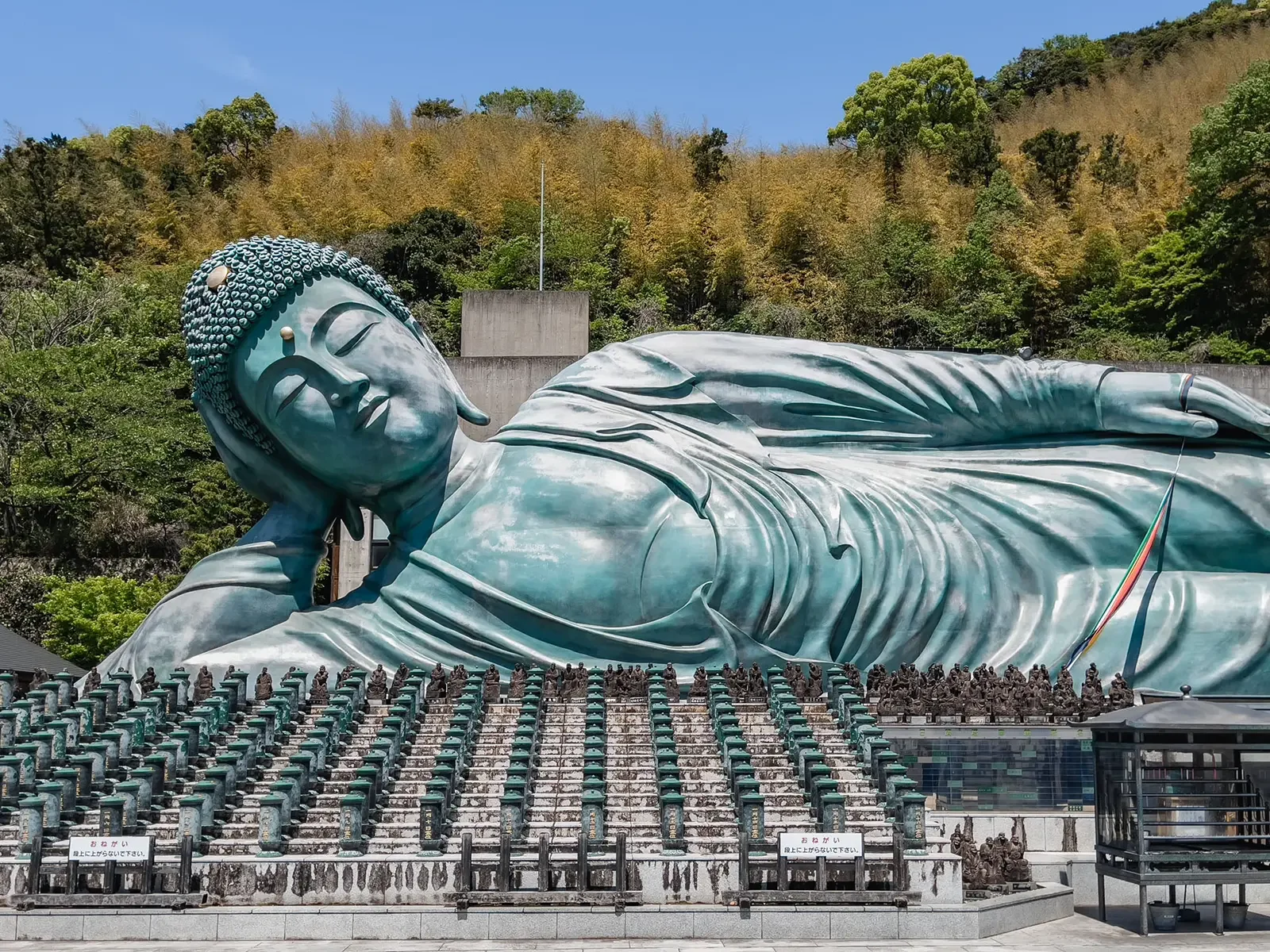
Nanzo-in Temple, Sasaguri, Fukuoka, Japan. Nanzo-in Temple is home to the world’s largest bronze reclining Buddha statue. The statue, measuring 41 metres in length, is a symbol of peace and enlightenment. The temple complex includes numerous smaller shrines and statues, each offering unique insights into Buddhist traditions.