Gion Matsuri: Kyoto’s 1,100-Year-Old Festival of Protection, Tradition, and Living Art
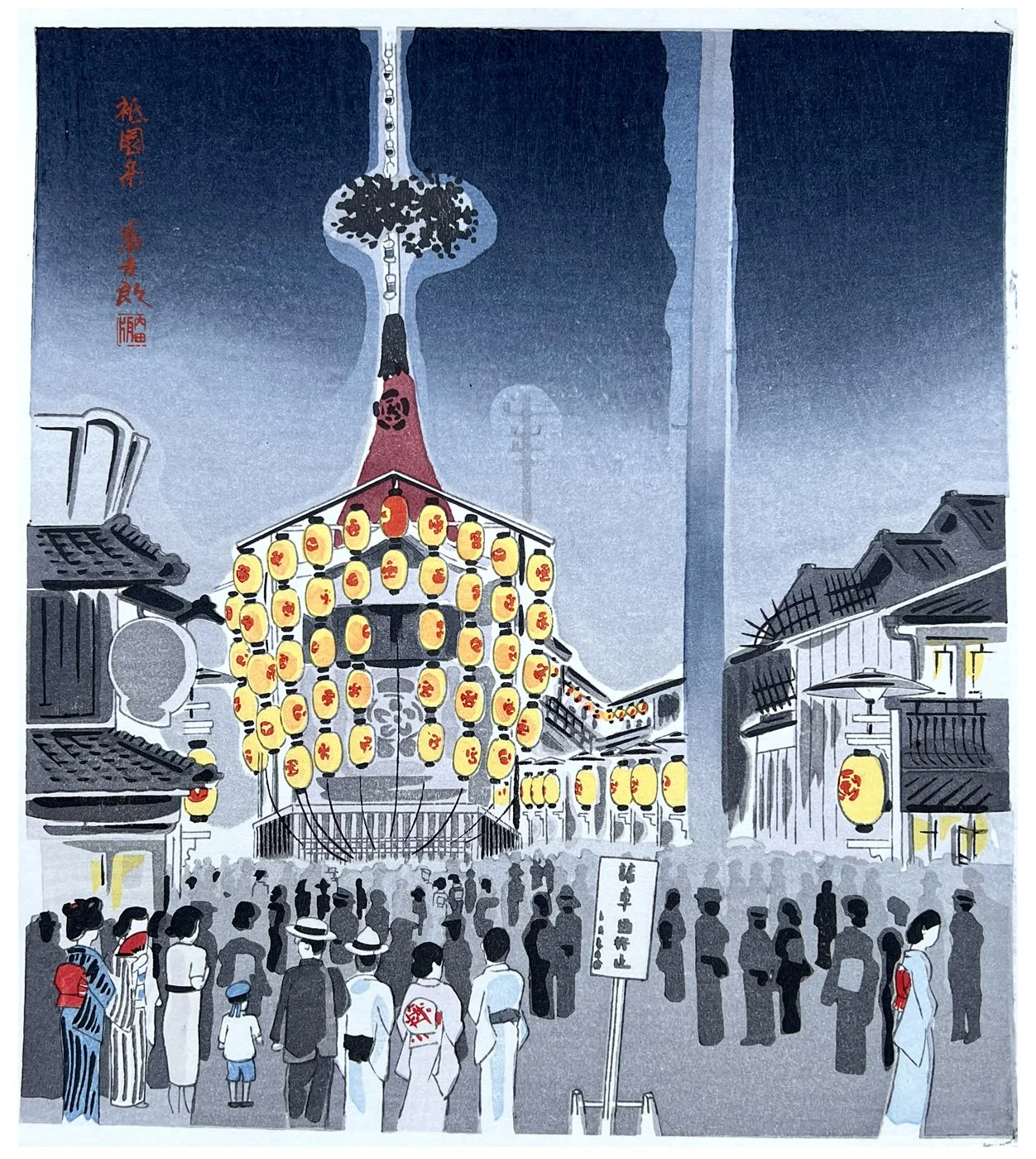
Tokuriki Tomikichiro (1902-1999)
Every July, the streets of Kyoto come alive with towering wooden floats, the sound of traditional festival music, and thousands of people dressed in yukata. Known as Gion Matsuri (祇園祭), it is one of Japan’s oldest and most celebrated festivals, with a history stretching back more than 1,100 years.
For many visitors, Gion Matsuri is a spectacular summer event filled with food stalls, parades, and beautiful traditional clothing. Beneath the celebrations, however, lies a fascinating history rooted in spirituality, craftsmanship, and community. It is a festival that has endured centuries of wars, fires, natural disasters, and social change while remaining one of Japan’s most important cultural traditions.
The Origins of Gion Matsuri
The festival began in 869 AD, during the Heian period, when Kyoto (then Heian-kyō) was struck by a devastating epidemic. At the time, people believed disease and natural disasters were caused by angry or restless spirits.
To calm these spirits, Emperor Seiwa ordered a ritual known as Goryō-e, where 66 halberds were erected to represent the provinces of Japan. Prayers were offered to the deities of Yasaka Shrine, asking for protection from illness and misfortune.
The epidemic eventually subsided, and the ceremony evolved into an annual event. Over the centuries, it transformed into the magnificent Gion Matsuri that continues today.
The Yamaboko Floats
The most recognisable feature of Gion Matsuri is its enormous yamaboko floats.
Some stand as tall as 25 metres and weigh up to 12 tonnes. Remarkably, they are assembled without the use of nails. Instead, skilled craftsmen bind the wooden framework together using traditional rope techniques that have been passed down through generations.
Many of the floats are adorned with intricate wood carvings, lacquer work, and historic textiles, including centuries-old fabrics imported from Persia, China, and Europe. Their artistic and historical significance has earned them the nickname “moving museums.”
The highlight of the festival is the Yamaboko Junko procession on 17 July and 24 July, when teams of volunteers pull these enormous floats through Kyoto’s streets. At intersections, the floats perform an impressive manoeuvre called tsuji-mawashi, where they are rotated using bamboo placed beneath the wheels, requiring remarkable teamwork and precision.
A Festival Kept Alive by the Community
One of the most remarkable aspects of Gion Matsuri is that it is not organised by the Japanese government.
Instead, responsibility for the festival rests with the local neighbourhoods that care for each float. Families, volunteers, craftspeople, and community organisations spend months preparing every detail, preserving traditions that have been handed down for generations.
This deep sense of community ownership is one of the reasons Gion Matsuri has survived for over 1,100 years. While many historic events rely on official organisations for their continuation, Gion Matsuri remains a living tradition sustained by the people of Kyoto themselves.
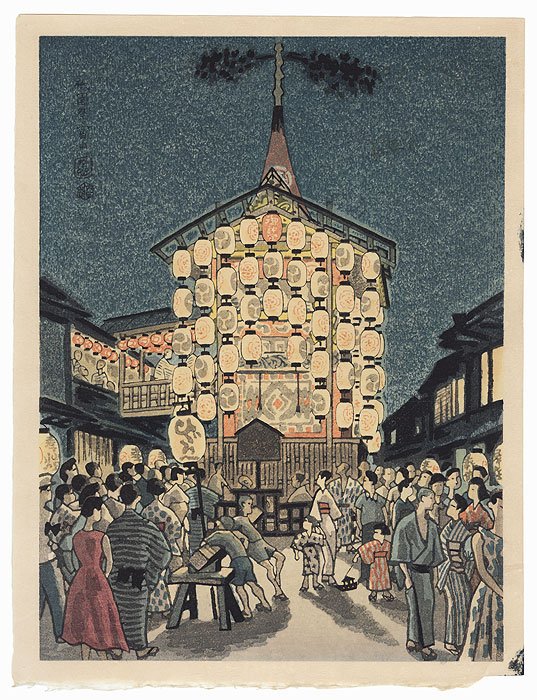
Nisaburo Ito (1910 - 1988)
A Connection to Traditional Japanese Tattooing
As a traditional Japanese tattoo artist, I often find myself drawn to cultural traditions like Gion Matsuri because they reflect many of the same values found within irezumi.
Traditional Japanese tattooing is about far more than the finished image. Like Gion Matsuri, it is built upon centuries of history, symbolism, and craftsmanship. Many of the motifs seen in Japanese tattoos—such as dragons, shishi, koi, and protective deities—share the same cultural foundations found in Japan’s festivals, shrines, and folklore.
When I look at a yamaboko float, I don’t just see a festival attraction. I see the same appreciation for craftsmanship that drew me to traditional Japanese tattooing. Every carving, textile, and painted detail exists because someone believed preserving beauty and tradition mattered.
Understanding celebrations like Gion Matsuri reminds us that Japanese tattooing did not develop in isolation. It grew alongside Japan’s religion, festivals, theatre, architecture, and traditional arts. The stories and values preserved through these traditions continue to inspire artists today, just as they have for generations.
Whether you’re considering a Japanese sleeve, bodysuit, or simply have an interest in Japanese culture, learning about festivals like Gion Matsuri offers a deeper appreciation for the rich history behind traditional Japanese tattooing. Thank you for reading.