Monkey King, Masks & Mythology: Japanese Monkey Tattoos Explained
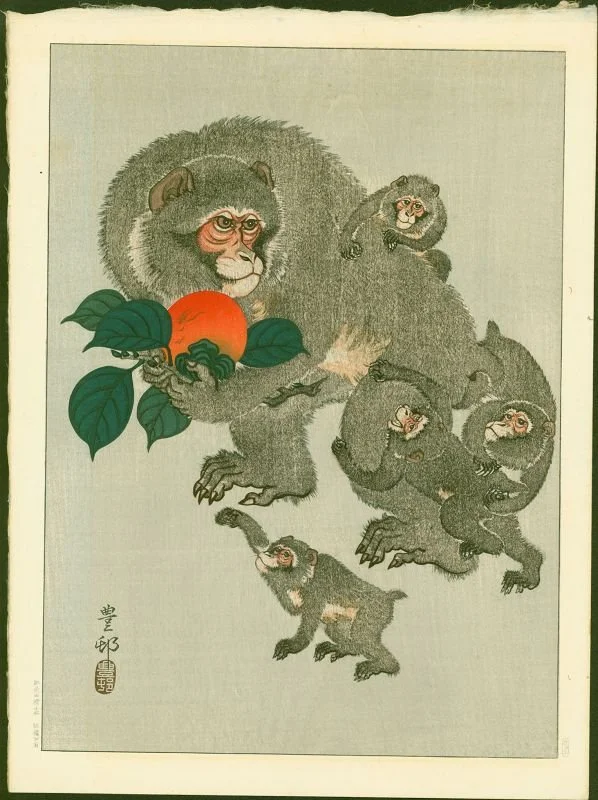
Ohara Hoson (Koson) - Monkey surrounded by four young, carrying a persimmon 1930s.
Monkeys are one of the most interesting and underrated subjects in Japanese tattooing. While dragons, koi and tigers are more commonly seen in irezumi, monkeys carry deep symbolism connected to folklore, the Chinese zodiac, spirituality and mythology.
From the legendary Monkey King to traditional monkey masks, monkey imagery can represent intelligence, adaptability, protection and playful rebellion. For those looking for a unique Japanese tattoo in Auckland or throughout New Zealand, monkeys offer a subject that feels both traditional and distinctive.
The Monkey in the Chinese Zodiac
The monkey is the ninth animal of the Chinese zodiac, which heavily influenced Japanese culture and symbolism. People born in the Year of the Monkey are often associated with:
Intelligence
Creativity
Curiosity
Adaptability
Charisma
In Japanese tattooing, the monkey often represents cleverness and strategy rather than brute strength. Zodiac monkey tattoos work beautifully in sleeves, back pieces and bodysuits, especially when paired with maple leaves, bamboo, clouds or traditional mikiri background.
Monkeys in Japanese Folklore
Monkeys have appeared throughout Japanese folklore for centuries and were sometimes believed to protect against bad luck and evil spirits. One of the most famous examples is the “Three Wise Monkeys”:
See no evil
Speak no evil
Hear no evil
This imagery became a symbol of wisdom and self-discipline, and translates extremely well into traditional Japanese tattoo composition.
The Japanese word for monkey is saru (猿), which also sounds similar to the word meaning “to leave.” Because of this, monkeys were historically seen as symbols that could drive away misfortune and illness.
Monkey Masks in Japanese Culture
Monkey masks appear in Japanese festivals, theatre and folk traditions. Like Hannya or Oni masks, they can symbolise transformation, instinct and hidden emotion.
In Japanese tattoos, monkey masks create bold and expressive imagery that pairs well with:
Wind bars
Smoke
Lightning
Cherry blossoms
Chrysanthemums
They are a great option for collectors wanting something less common while still rooted in traditional Japanese art.
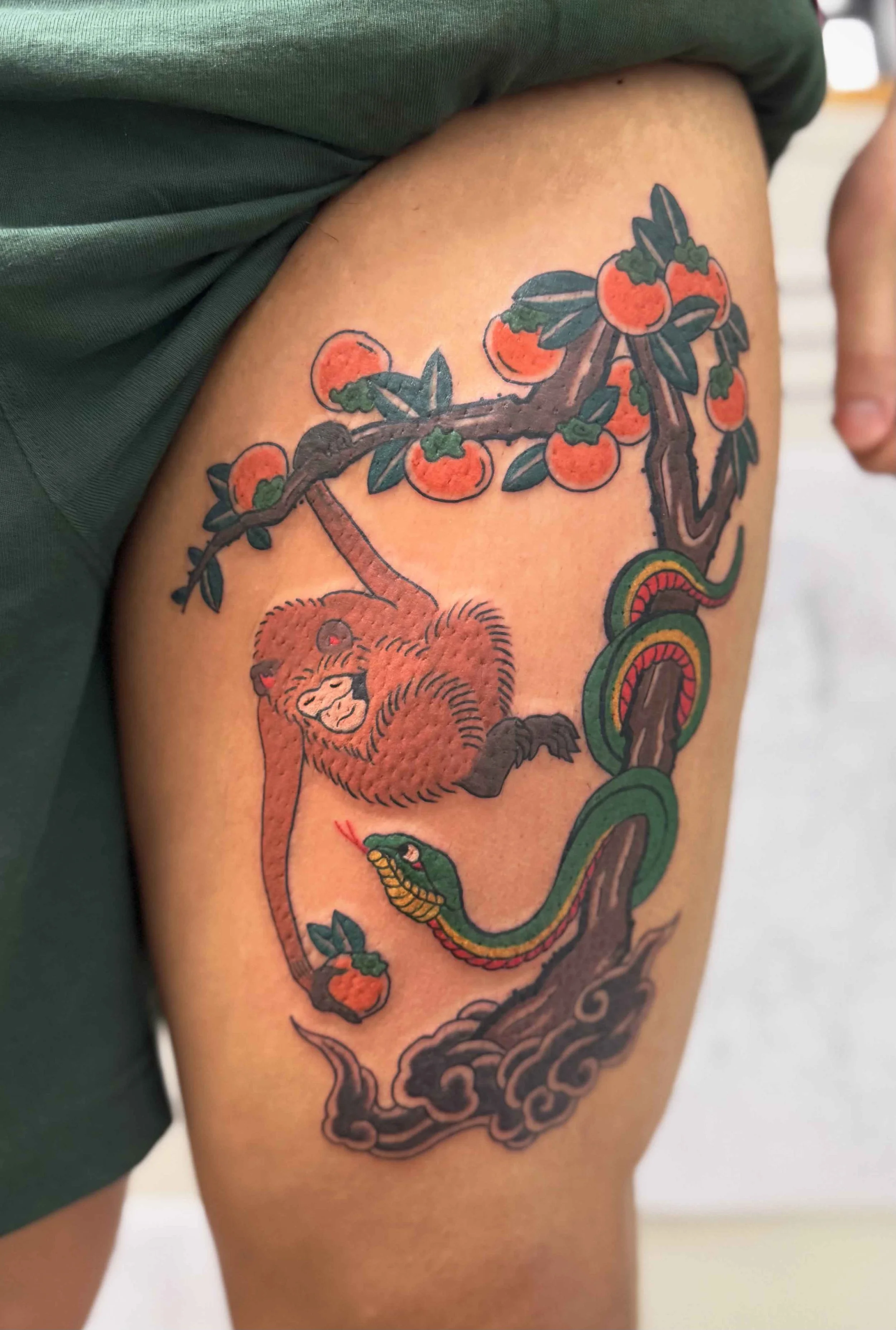
Monkey & Snake Zodiac tattoo done by Horiyama. Auckland, NZ
The Monkey King (Son Goku)
One of the most famous monkey figures in Asian mythology is the Monkey King, known in Japan as Son Goku. Originating from the classic story Journey to the West, the Monkey King is a rebellious warrior associated with strength, freedom and intelligence.
He is often depicted with:
A magical staff
Flowing robes
Clouds and fire
Armour and dramatic movement
The Monkey King translates perfectly into large-scale irezumi such as sleeves, back pieces and bodysuits due to his energetic movement and expressive design.
Monkeys in Japanese Tattooing
Monkey tattoos can range from playful and humorous to fierce and spiritual. Their expressive faces and movement work naturally with the body, making them ideal for large-scale Japanese tattoo projects.
For those interested in traditional Japanese tattooing in New Zealand, monkey imagery offers a subject rich in mythology, symbolism and personality while still remaining deeply connected to the traditions of irezumi. Thank you for reading!