Why Samurai Make Great Tattoos
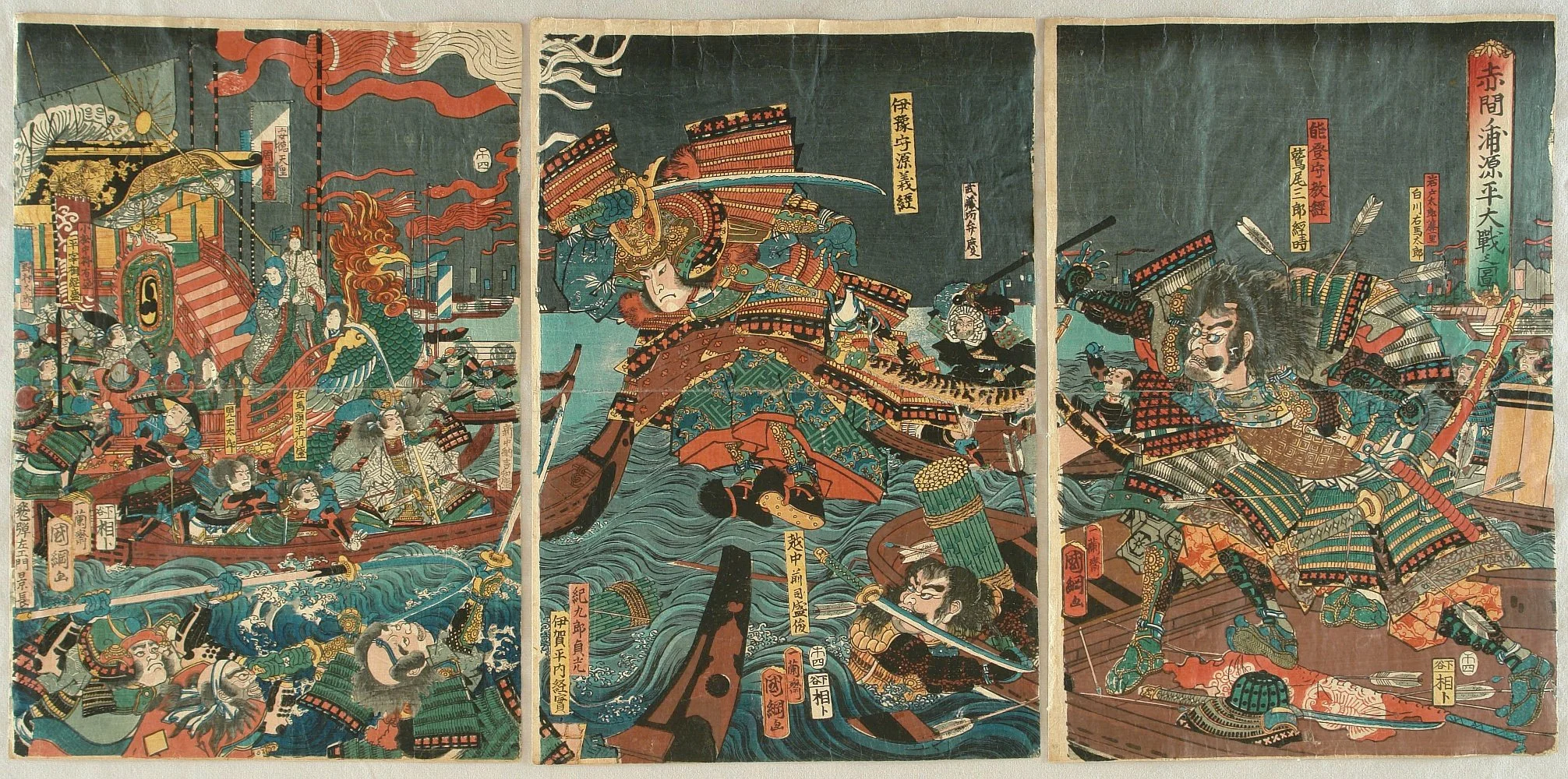
Battle of Dan-no-ura 1185 and the Fall of the Taira Clan - Kuniyoshi Utagawa 1797-1861
Samurai have remained one of the most enduring subjects in Japanese tattooing for good reason. Beyond their striking appearance, samurai imagery carries themes of discipline, loyalty, resilience, and courage — qualities that naturally lend themselves to large-scale irezumi.
Visually, samurai tattoos offer an incredible amount of detail and variety. From dramatic battle scenes and fierce expressions to intricate armour and weaponry, they create tattoos that feel powerful and timeless.
One of the most fascinating parts of samurai imagery is the armour itself.
Traditional samurai armour was not made from a single solid suit like European plate armour. Instead, it was built from many separate components layered together for protection, flexibility, and movement. This creates an incredible amount of texture and detail when translated into tattooing.
Some of the key elements include:
Kabuto (Helmet)
The kabuto is the samurai helmet, often featuring elaborate crests, horns, or decorative maedate ornaments. Many helmets were designed to appear intimidating on the battlefield while also representing the samurai’s clan and status. In tattooing, the kabuto often becomes a major focal point of the composition.Menpo (Face Armour)
The menpo is the armoured face mask worn beneath the helmet. These masks were designed with exaggerated expressions, moustaches, wrinkles, and aggressive features to intimidate enemies. Menpo masks translate beautifully into tattooing because they add personality, emotion, and intensity to the piece.Sode (Shoulder Guards)
Large rectangular shoulder guards would hang from the armour to protect the upper arms and shoulders. Their layered construction creates strong shapes and overlapping textures that work especially well in sleeves and chest panels.Do (Chest Armour)
The do is the main chest armour that protected the torso. Many were constructed using lacquered metal or leather plates bound together with silk cord. The repeated layering and lacing patterns create a huge amount of visual detail in large-scale tattoos.Odoshi (Silk Lacing)
One of the most recognisable aspects of samurai armour is the intricate silk lacing used to bind the plates together. Different colours and patterns could represent rank, clan affiliation, or personal taste. In tattooing, these cords help break up heavier areas of armour and add rhythm throughout the design.Kusazuri (Armoured Skirt Panels)
These layered panels hung from the waist to protect the hips and thighs while still allowing movement in combat. They create natural overlapping shapes that suit the curves of the body particularly well.Kote & Haidate (Armoured Sleeves and Thigh Guards)
Samurai armour also included protective fabric sleeves reinforced with chainmail, plates, and padded materials. These details give tattoo designs a worn, battle-ready appearance with lots of texture and contrast.
All of these individual components work together to create imagery that feels rich, layered, and dynamic in tattoo form.
Samurai subjects also pair naturally with traditional Japanese imagery such as dragons, snakes, peonies, maple leaves, waves, chrysanthemums, and mikiri background. Depending on the design, a samurai tattoo can feel noble and heroic, dark and intimidating, or calm and reflective.
Many samurai tattoos are inspired by Japanese history, kabuki theatre, folklore, and ukiyo-e woodblock prints. These historical references give the imagery a timeless quality that continues to resonate today.
Large-scale Japanese tattooing allows the armour details, facial expressions, and surrounding imagery to fully develop across the body over time. Sleeves, back pieces, and body suits especially suit samurai themes because they provide enough space for the detail and layering to breathe properly.
Whether depicted mid-battle or standing with quiet intensity, samurai remain one of the most iconic subjects in Japanese tattooing.
If you are considering a samurai tattoo in Auckland or anywhere in New Zealand, feel free to get in touch via the contact form on my website. Thank you for reading!
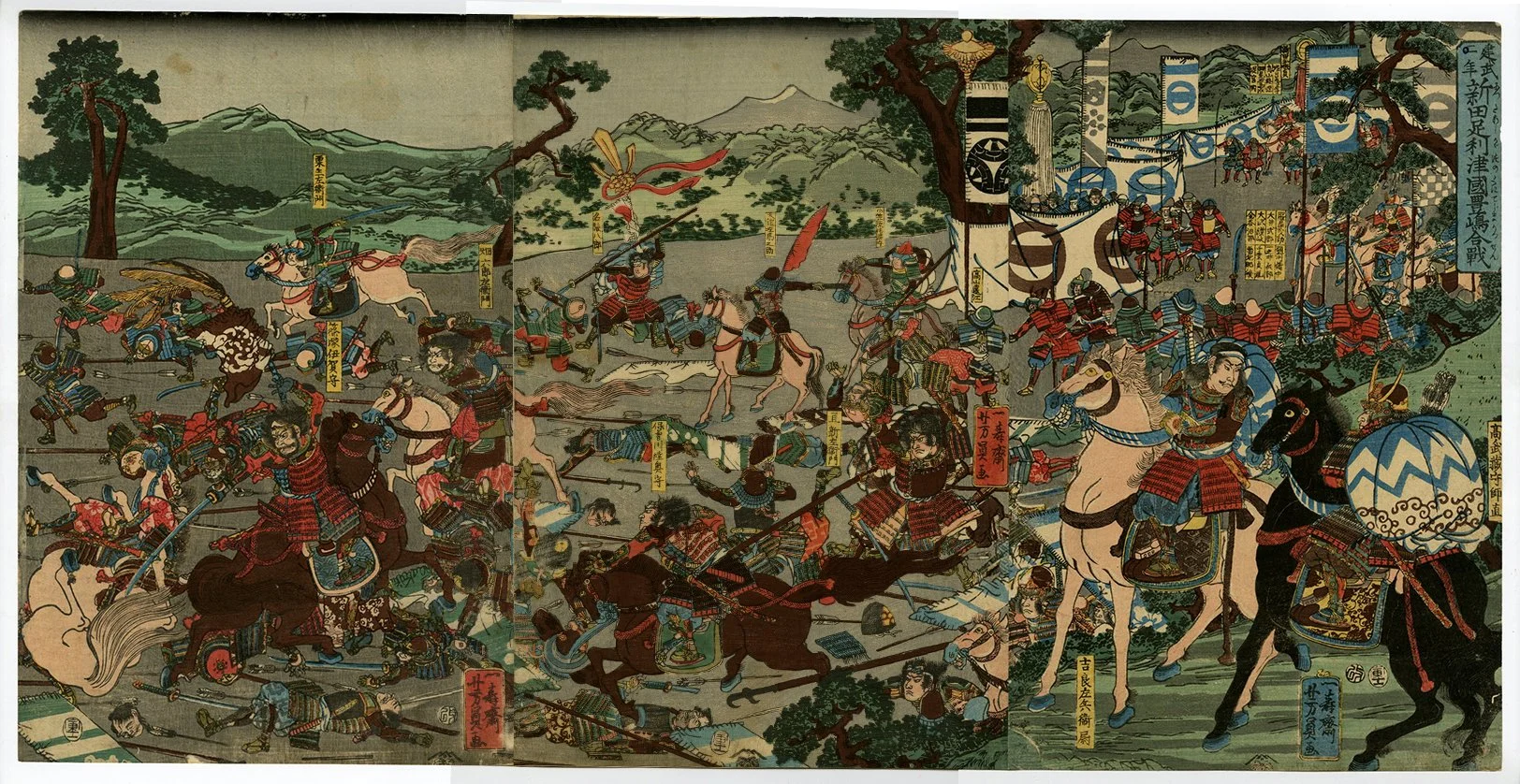
Battle of Toyoshima in Tsu Province, Kenmu 2nd year (1335) - Yoshikazu 1854