Shuten-dōji: The Demon King Behind Oni Tattoos
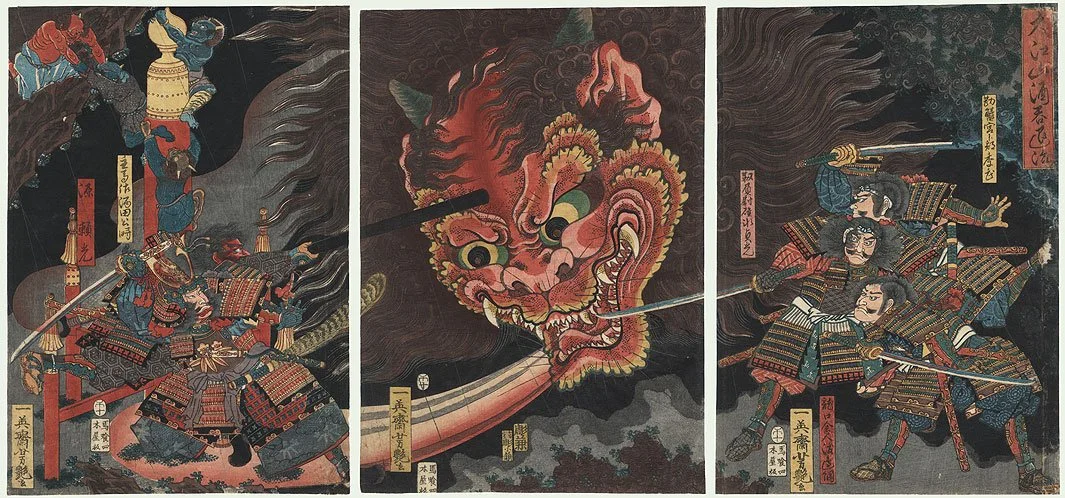
Yoshitsuya (1822 - 1866) The Extermination of Shuten-doji at Oeyama, 1858
When most people think of Japanese oni, they picture fierce red or blue demons with horns, fangs, and terrifying expressions. Oni have become one of the most recognisable subjects in Japanese tattooing, but many people don’t know the legend behind Japan’s most famous demon: Shuten-dōji.
Who Was Shuten-dōji?
According to Japanese folklore, Shuten-dōji was the most feared oni in all of Japan.
His name roughly translates to “Little Drunken Boy,” though there was nothing small about him. Shuten-dōji was said to be a gigantic demon who lived deep within the mountains of Ōe, northwest of Kyoto. From his fortress hidden among the peaks, he terrorized the surrounding countryside.
Villagers lived in fear of him. Travellers disappeared along mountain roads, and noble families whispered stories of daughters being kidnapped and taken to the demon’s lair. The more the stories spread, the more Shuten-dōji’s legend grew.
Eventually, the Emperor could no longer ignore the threat.
The Warrior Sent to Defeat a Demon
To destroy Shuten-dōji, the Emperor called upon the legendary warrior Minamoto no Raikō and his loyal retainers.
Rather than attack the demon head-on, Raikō devised a clever plan. The warriors disguised themselves as wandering monks and travelled into the mountains carrying a special gift: enchanted sake.
When they arrived at the oni’s fortress, Shuten-dōji welcomed them inside. Like his name suggested, the demon loved alcohol. The warriors offered him the enchanted sake, claiming it was a rare and powerful drink.
Shuten-dōji drank deeply.
And then he drank more.
Eventually the powerful oni became heavily intoxicated and fell into a deep sleep.
The Fall of the Demon King
With the demon unconscious, Raikō and his warriors drew their swords.
They attacked Shuten-dōji while he slept, striking with all their strength. Even then, the oni was incredibly powerful. According to the legend, after his head was severed, it remained alive and lunged at Raikō with its fangs still snapping.
Only the protective helmet gifted by the gods saved the warrior from death.
At last, Shuten-dōji was defeated and peace returned to the region.
Yet despite his defeat, the demon’s legend survived for centuries and became one of the most famous stories in Japanese folklore.
What Does Shuten-dōji Represent?
Like many figures in Japanese mythology, Shuten-dōji is more complex than simply being a villain.
His story represents themes of chaos versus order, temptation, excess, strength, and the consequences of unchecked power. The tale also highlights the importance of courage, strategy, and discipline in overcoming seemingly impossible challenges.
These themes are one reason oni remain so popular in traditional Japanese art and tattooing.
Shuten-dōji and Japanese Tattoos
Today, oni are among the most requested subjects in Japanese tattooing.
An oni tattoo can represent many things depending on the design. Some people view oni as symbols of protection, warding off bad luck and negative influences. Others are drawn to their fierce appearance, representing strength, resilience, and the ability to confront adversity head-on.
The story of Shuten-dōji adds another layer of meaning. Rather than being a simple monster, he represents the darker aspects of human nature—anger, excess, temptation, and pride. For some collectors, an oni tattoo serves as a reminder to acknowledge these struggles rather than ignore them.
Whether depicted as a terrifying demon king, a traditional oni mask, or as part of a larger battle scene, Shuten-dōji remains one of the most influential figures in Japanese folklore and tattoo art.
Final Thoughts
Japanese tattooing is filled with stories that stretch back hundreds of years, and few are as iconic as the legend of Shuten-dōji.
The next time you see an oni tattoo, remember that behind the horns and fangs lies a tale of warriors, demons, courage, and one of the most enduring legends in Japanese mythology.
Understanding these stories adds depth to the artwork and helps keep these incredible traditions alive for future generations. Thank you for reading.
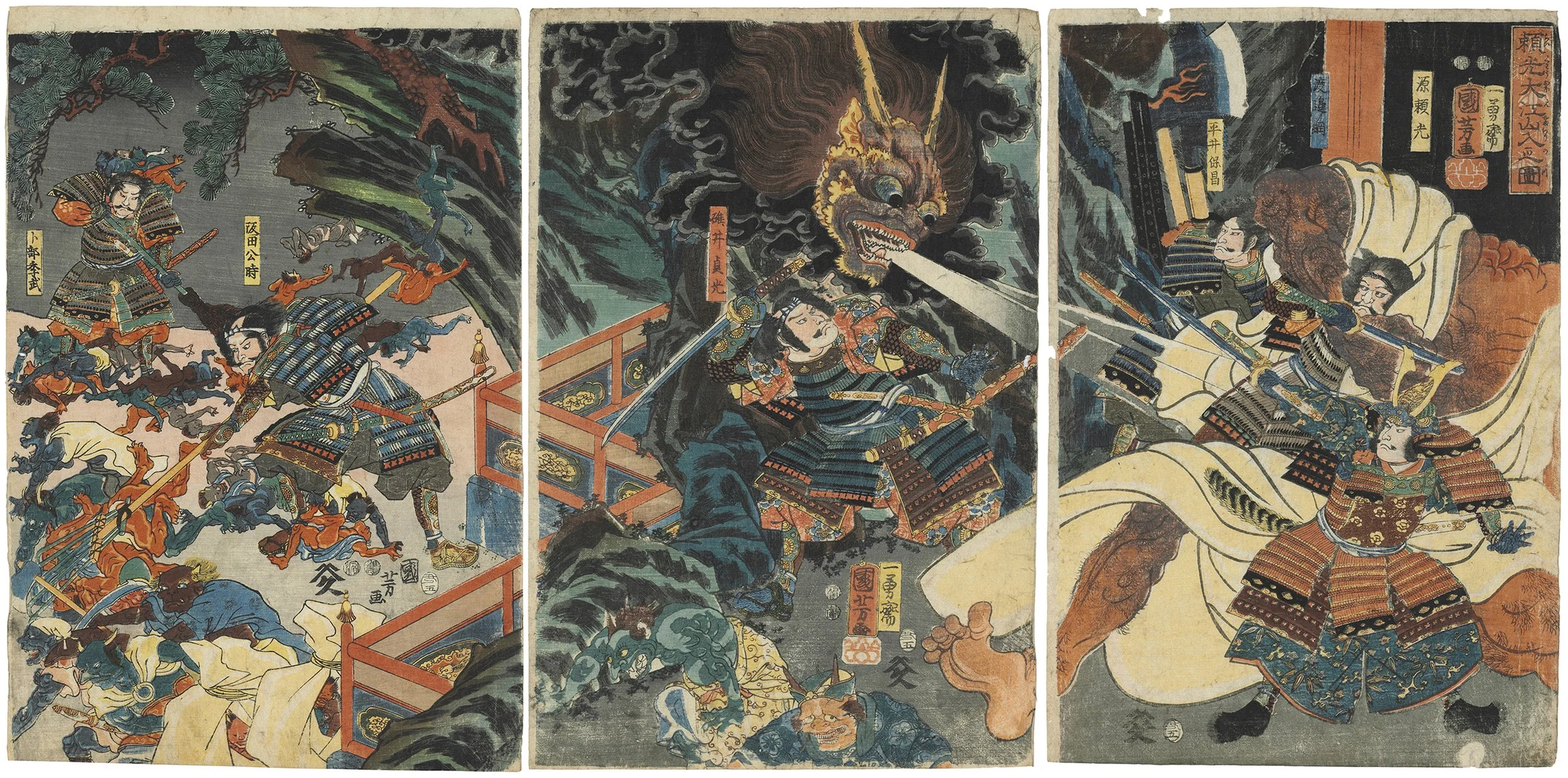
UTAGAWA KUNIYOSHI (1797-1861) Raiko severing the head of the Shuten-doji, while his followers destroy other demons (Raiko Oeyama iri no zu)