Chest Plates in Japanese Tattooing: Over or Under the Nipple?
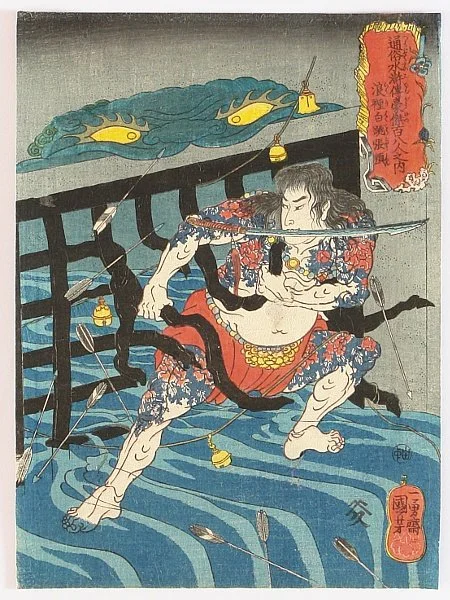
A common question when planning a Japanese tattoo chest plate is whether the design should go over the nipple or leave it exposed. There is no strict right or wrong answer, but each approach changes the overall look and feeling of the piece quite dramatically.
Traditionally in irezumi, the chest panel (hikae) was designed as part of a much larger composition flowing from the sleeve into the torso. Because of this, older Edo-period inspired body suit tattooing often allowed the imagery and mikiri (irezumi background) to move naturally across the body without treating the nipple as something that needed to be avoided. The tattoo was viewed more as a continuous garment flowing over the body rather than separate sections.
In many traditional full body suits, the design simply continued through the nipple area as part of the overall balance and continuity of the piece. This uninterrupted flow can create a very powerful look, especially in large-scale Japanese tattooing where the relationship between the sleeve, chest plate, back, and body is carefully considered as a whole.
Leaving the nipple exposed became more common in post-war and modern Japanese tattooing, particularly as tattooing evolved alongside western clientele and contemporary aesthetics. Open nipples can create a cleaner visual break in the chest panel and slightly soften the overall appearance of the tattoo. Many people also prefer this option when wearing open shirts or singlets, as the chest can feel less visually heavy.
Today, both approaches exist throughout Japan. It is less about specific regions or cities and more about the individual tattooer, their lineage, and the overall style of the work. Generally speaking, more traditional full suit focused tattooing is more likely to flow through the nipple area, while more modern interpretations often frame around it.
Pain is naturally something many people wonder about as well. The nipple area is sensitive, but in reality it is only a very small part of a much larger tattoo. Most clients find the anticipation is worse than the actual tattooing itself.
Ultimately, the best choice depends on the overall direction of the piece, the client’s comfort level, and how traditional they want the final result to feel. When designing Japanese tattoos, I always try to think about the body as a whole rather than isolated sections. A well-balanced chest plate should feel like a natural extension of the sleeve and work with the anatomy whether the nipple is included or left open.
If you are considering Japanese tattooing or irezumi in Auckland or elsewhere in New Zealand, feel free to get in touch through the contact form!