Miyamoto Musashi in Japanese Tattooing - Strength, Strategy, and Movement in Irezumi
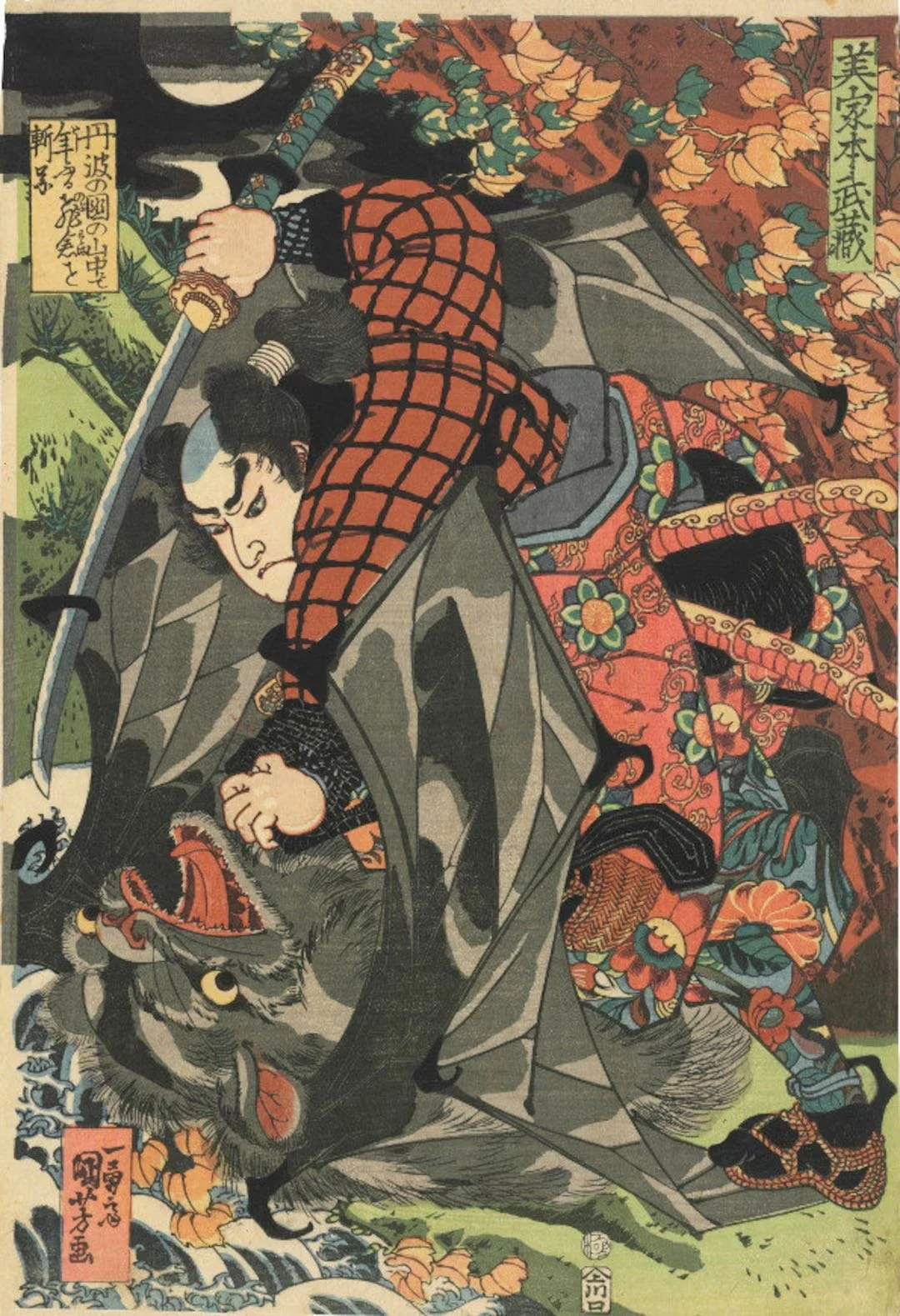
Utagawa Kuniyoshi - Miyamoto Musashi Killing A Giant Bat (1830)
When it comes to Japanese tattooing (irezumi), few historical figures carry the same weight and presence as Miyamoto Musashi. Known as Japan’s most famous swordsman, Musashi represents discipline, adaptability, and mastery—not just in combat, but in life.
For those considering a large-scale Japanese tattoo, Musashi is a powerful subject. His imagery translates especially well into back pieces, where movement, storytelling, and composition can be fully be expressed.
Who Was Miyamoto Musashi?
Miyamoto Musashi (宮本武蔵) was a legendary ronin and duelist from the early Edo period. He is most well known for his undefeated record in over 60 duels and for developing the two-sword fighting style (Niten Ichi-ryū).
Beyond combat, Musashi was also an artist and philosopher, best known for The Book of Five Rings—a text that explores strategy, discipline, and mindset.
In Japanese tattooing, Musashi represents:
Strength through discipline
Adaptability in the face of adversity
Calmness under pressure
A life dedicated to mastery
Musashi in Ukiyo-e and Woodblock Prints
Musashi’s legacy has been widely depicted in traditional Japanese woodblock prints (ukiyo-e), particularly during the Edo period. These prints often exaggerate and dramatise his encounters, turning them into almost mythical scenes.
Some of the more striking compositions show Musashi battling unusual or symbolic creatures, such as:
A giant bat
A crocodile or dragon-like beast
Tengu (supernatural mountain spirits)
These scenes are not always historically accurate but they create dynamic storytelling and allow for bold, expressive compositions.
Why Musashi Works So Well as a Back Piece
The back is the most powerful canvas in Japanese tattooing. It allows for scale, movement, and narrative in a way that smaller placements simply can’t achieve.
Musashi as a subject fits this perfectly.
1. Natural Movement Through the Body
Musashi is almost always depicted mid-action—twisting, striking, or reacting. This creates natural flow across the shoulders, spine, and hips.
Rather than forcing composition, the figure can be designed to move with your body.
2. Strong Central Figure
A back piece needs a clear focal point. Musashi provides that immediately—his stance, expression, and weapons anchor the entire design.
Everything else (background, creatures, environment) supports him.
3. Dynamic Storytelling
Scenes like Musashi fighting a tengu or confronting a beast allow for layered storytelling:
Conflict
Tension
Resolution
This makes the tattoo more engaging over time, not just visually, but conceptually.
4. Balance with Background (Mikiri)
The interaction between Musashi and the background (mikiri) is where irezumi really comes to life.
Wind bars, rocks, water, or storm elements can be used to:
Emphasise movement
Frame the figure
Create contrast and depth
This is not just decoration—it’s structure.
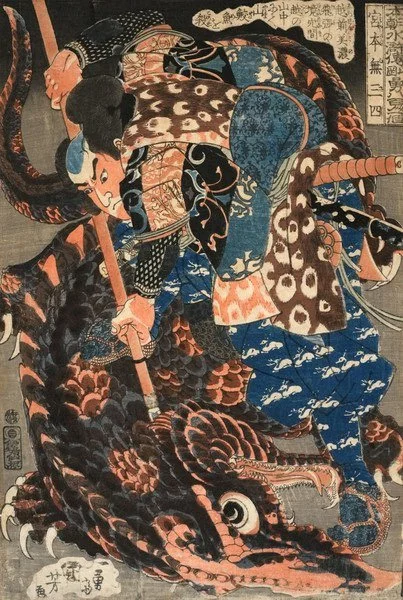
Rising - Miyamoto Musashi Killing a Giant Nue (1830)
Composition Ideas for a Musashi Back Piece
A well-designed Musashi tattoo should feel intentional and balanced. Some strong directions include:
Musashi vs Tengu
A classic symbolic pairing—discipline versus supernatural skill. Great for dramatic movement and expressive background.Musashi and Crocodile
Creates weight and tension in the lower back, grounding the composition while allowing the upper body to open up.Musashi in Motion with Minimal Narrative
Focus purely on the figure—two swords drawn, strong posture, subtle background. Clean, powerful, and timeless.
Why Large-Scale Matters
Musashi is not a subject that works well when reduced too small.
To do him justice, you need space:
To capture expression and detail
To build proper movement
To integrate background (mikiri) effectively
This is why back pieces, full sleeves, or body suits are ideal.
Large-scale Japanese tattooing allows the design to breathe—and ensures it will age well over time.
Getting Started
If you’re considering a Miyamoto Musashi tattoo, the best place to start is with a consultation.
When reaching out, it helps to include:
Your idea or subject (e.g. Musashi vs tengu)
Placement (back piece, sleeve, etc.)
Approximate size
Any reference images you like
From there, I can guide you through the design process and create something tailored specifically to your body.
Japanese Tattooing in Auckland, New Zealand
I specialise in traditional Japanese tattooing (irezumi) here in Auckland, New Zealand. My work focuses on strong composition, meaningful subject matter, and backgrounds (mikiri) designed directly on the body. If you’re looking for a tattoo artist in Auckland who specialises in Japanese tattoos and large-scale work, feel free to get in touch!
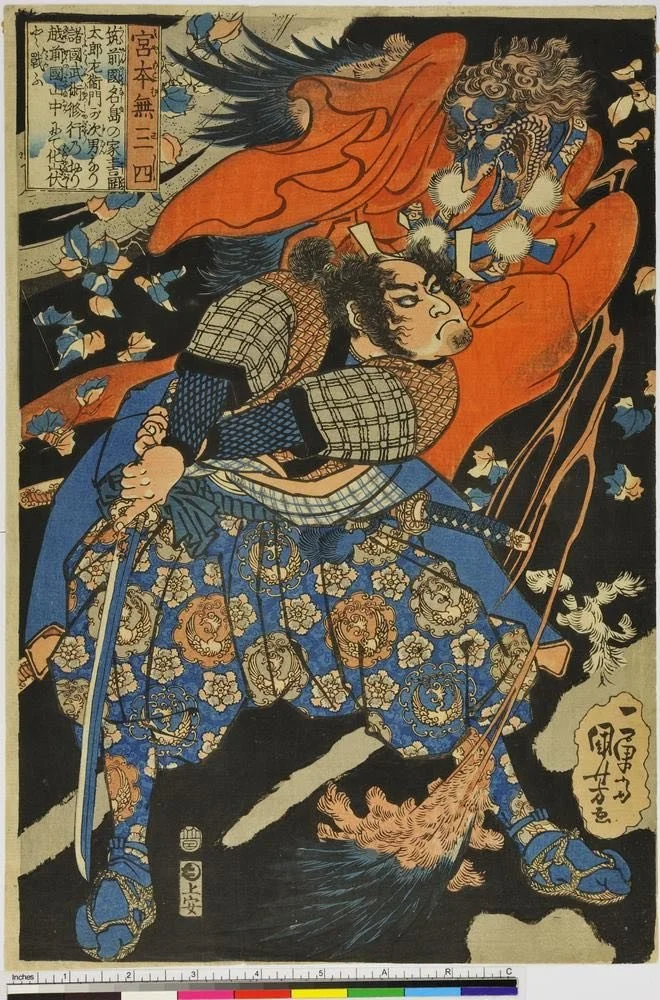
Woodblock print, oban tate-e. The famous swordsman Miyamoto Musashi battling with a mountain hermit who has turned into a monster. Print artist: 歌川国芳