Traditional Japanese Wooden Toys and Folk Charms: Small Objects with Big Character
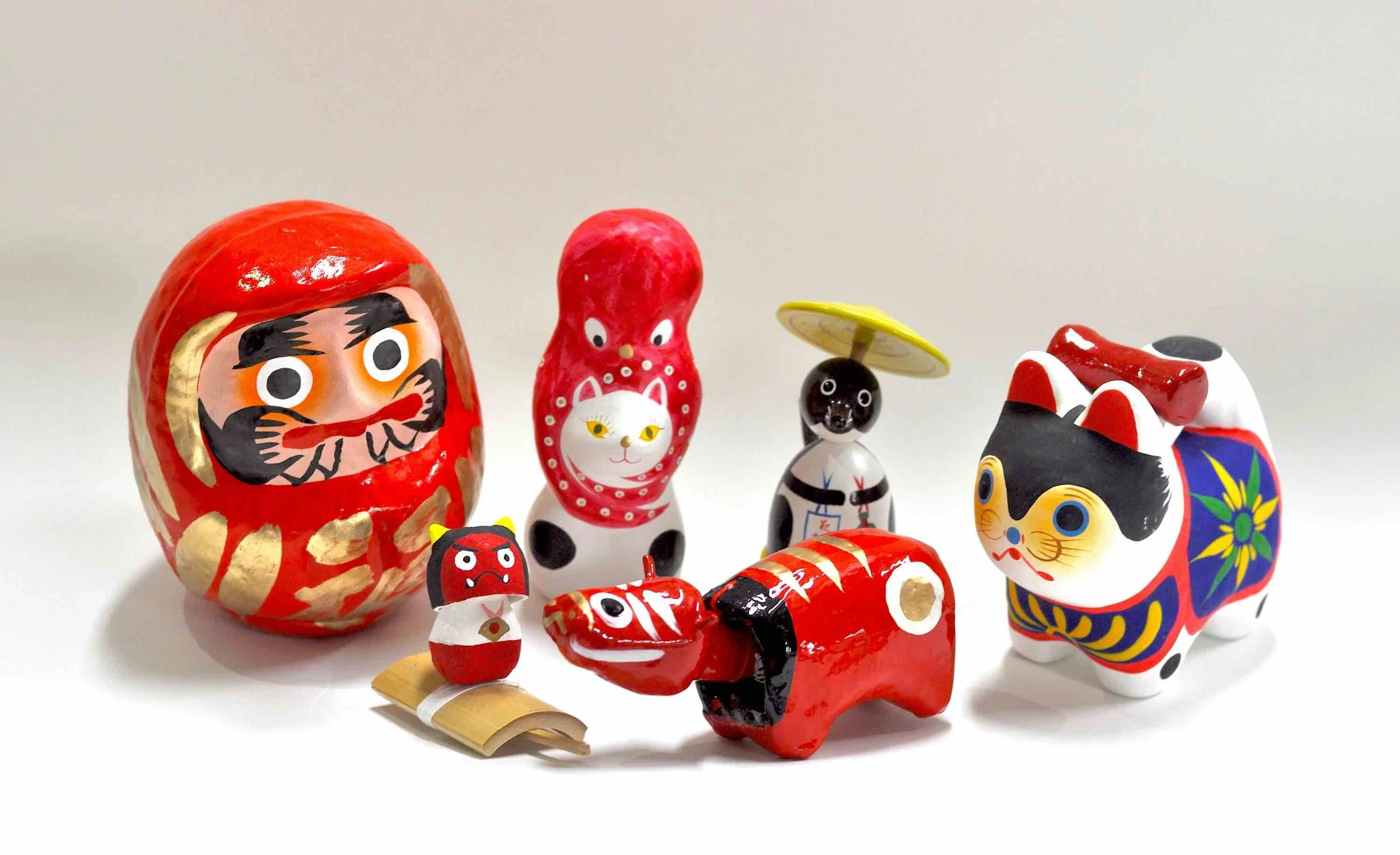
Japan has a long tradition of hand-carved wooden toys, talismans, and folk figures that are full of charm, symbolism, and personality. Long before modern collectibles, these pieces were made for children, for good luck, or simply to bring joy into the home. Their bold shapes, simple lines, and expressive faces have helped them endure for generations.
Today, traditional Japanese wooden toys also make excellent inspiration for tattoos—especially smaller one-point tattoos with character, humour, and cultural depth.
For anyone interested in Japanese art beyond the usual dragons, koi, and samurai, these folk objects are a fascinating world to explore.
What Are Japanese Folk Toys?
Known broadly as mingei (folk craft) or regional toys, many of these pieces were handmade from wood, clay, or papier-mache and sold at temples, shrines, festivals, or local markets.
They often carried meaning such as:
Protection from evil
Good fortune and prosperity
Fertility and family blessings
Strength and perseverance
Safe travel
Happiness in the home
Every region of Japan developed its own style, meaning there is a huge variety of forms and characters.
Famous Traditional Japanese Toys
Daruma
One of Japan’s most iconic figures, the Daruma is based on Bodhidharma, the founder of Zen Buddhism. Its rounded shape symbolises resilience. When pushed over, it returns upright.
Daruma are associated with:
Determination
Goal setting
Persistence
Overcoming hardship
A Daruma tattoo works beautifully as a bold one-point design.
Kokeshi Dolls
Simple wooden dolls with round heads and painted bodies, originally from northern Japan. Their clean silhouette and handmade feel make them timeless.
They can represent:
Simplicity
Childhood nostalgia
Regional craft tradition
Quiet beauty
Maneki Neko
The lucky beckoning cat is instantly recognisable. While often ceramic, many wooden versions exist too.
It symbolises:
Good luck
Business success
Wealth
Protection of the home
Perfect for playful smaller tattoos.
Inu Hariko
A traditional toy dog often gifted for children’s health and protection.
Meaning includes:
Family wellbeing
Safe childbirth
Loyalty
Protection
Akabeko
The famous red cow from Fukushima with a bobbing head.
It is linked to:
Strength
Protection from illness
Endurance
Its exaggerated shape makes it ideal for tattoo adaptation.
Kuruma-uma
These are wooden horses mounted on wheels, made as pull toys for children. Japan has many regional horse toys because horses were historically important for farming, transport, and samurai culture.
They often symbolise:
Strength
Safe journeys
Hard work
Prosperity
Visually, they make fantastic tattoos because the wheel base gives a bold, quirky silhouette.
Tanuki
Tanuki (Japanese raccoon dog) appear constantly in Japanese folk art, toys, ceramics, and statues. They are beloved trickster figures associated with:
Good luck
Prosperity
Cheerfulness
Cleverness
Adaptability
Traditional tanuki statues are often seen outside shops and restaurants in Japan.
Why These Make Great One Point Tattoos
Not every Japanese tattoo needs to be large-scale. While irezumi is known for sleeves, back pieces, and bodysuits, smaller one-point tattoos can still carry strong character and meaning. Japanese folk toys capture a lighter and more playful side of traditional culture. These subjects also translate beautifully into small tattoos with bold shapes and personality
Traditional folk toys work especially well because they already have:
Bold readable silhouettes
Strong colour palettes
Expressive faces
Cultural history
Compact compositions
That means they translate naturally into tattoos on the forearm, calf, ankle, upper arm, shoulder blade, or even the ribs.
A Different Side of Japanese Tattooing
Many people think Japanese tattooing only means fierce imagery—dragons, tigers, oni, warriors. Those subjects are powerful, but Japanese visual culture is much broader than that.
Folk toys show another side:
Humour
Warmth
Good fortune
Everyday beauty
Handmade tradition
They can also pair well with florals like peony, chrysanthemum, sakura, or maple leaves.
Tattoo Ideas Inspired by Japanese Folk Toys
Some strong options include:
Daruma with peony petals
Lucky cat with coins or bells
Kokeshi doll with cherry blossoms
Akabeko with clouds
Inu Hariko with chrysanthemum
Mini toy collection as a flash sheet
These designs can stay simple or be adapted with a more traditional Horiyama approach.
Interested in a Unique Japanese Tattoo?
If you want something rooted in Japanese culture but a little different from the standard choices, traditional wooden toys and folk charms are a brilliant direction.
They are playful, meaningful, and full of personality—small designs with real history behind them.
If you are considering a Japanese tattoo in Auckland or anywhere in New Zealand, feel free to get in touch through the contact form on www.horiyama.co.nz.
Whether it is a one-point lucky charm or a full large-scale project, I’m happy to help shape the right design for you.
Thank you for reading!
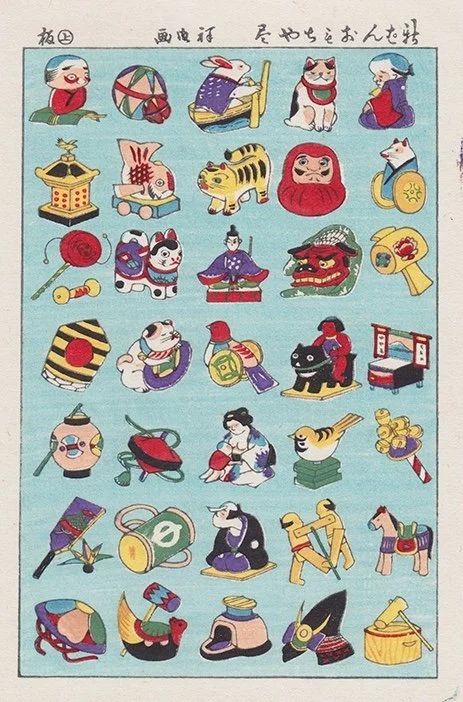
Suzuki Shooko - Assorted Toys (shinpan omocha zukushi). Published by Ise Tatsu. 1940s