Pain, Healing and commitment: What to expect from Large-scale tattooing
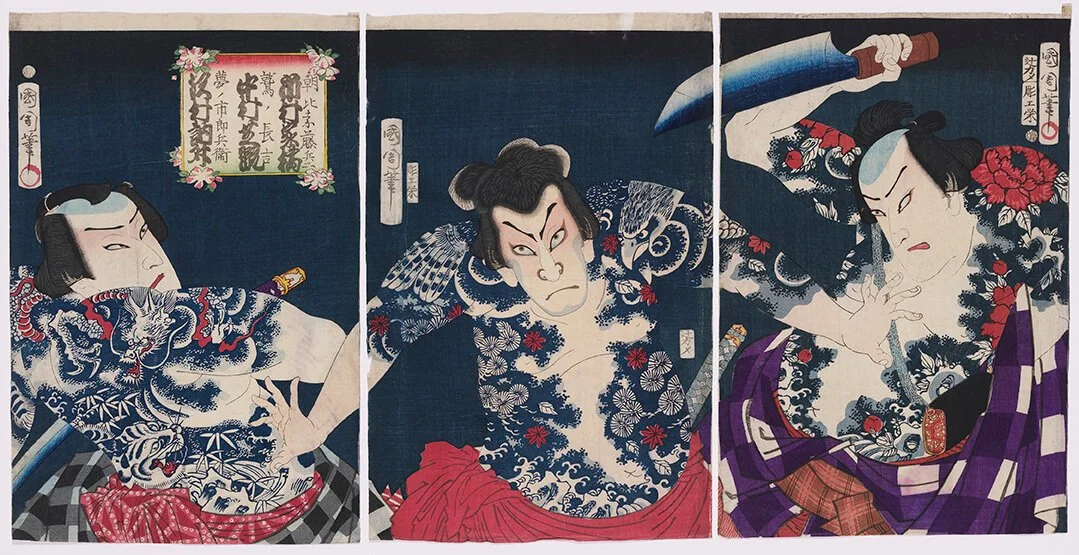
Toyohara Kunichika, Edo period–Meiji era, 1868, woodblock print. Museum of Fine Arts, Boston.
Large-scale Japanese tattooing; whether it’s a sleeve, back piece, or body suit is a different experience from a small, one-off tattoo. It’s not just about the final result. It’s about the process, and how each session builds into something that feels complete on the body. While people often focus on pain or time, most clients come to enjoy the rhythm of it. Understanding what to expect makes the whole experience feel a lot more manageable and something to look forward to.
Pain: Manageable and Temporary
Pain is usually the first concern, but it’s rarely as overwhelming as people expect. Some areas are naturally more sensitive (inner arm, ribs, knees, spine), and longer sessions can feel more demanding, but most people settle into it quickly. After the first hour, it becomes less about sharp pain and more about finding a steady rhythm. Clients often describe it as something they get used to rather than something they have to fight through. With breaks, good pacing, and the right mindset, it’s very manageable and for most people, it becomes just one small part of the overall experience.
Healing: Progress You Can See
One of the most rewarding parts of large-scale tattooing is seeing it develop over time. After each session, your tattoo goes through a familiar cycle:
Initial sensitivity and redness (first 1–2 days)
Light peeling as the skin renews (around days 3–7)
The tattoo settling and softening into the skin
Each stage is part of the process, and each session adds another layer. You’re not waiting months to see results—you’re seeing progress every step of the way. With simple aftercare (keeping it clean, lightly moisturised, and out of the sun) your skin heals well and the work holds its clarity.
Commitment: A Steady Build, Not a Rush
Large-scale work takes time, but it’s not something you have to rush through. Most projects are built across multiple sessions, spaced in a way that allows your skin to heal properly and the design to come together naturally. Each session has its own milestone—outline, shading, colour—so there’s always a sense of progress. Consistency helps, but it doesn’t need to feel overwhelming. The process is designed to fit around your life and your schedule, not take it over.
Trusting the Process
At certain stages, the tattoo may look unfinished—that’s completely normal. Japanese tattooing is built in layers. The background (mikiri), main imagery, and placement are all designed to work together over time. What might feel incomplete early on becomes balanced and cohesive as the piece develops. By the end, everything connects in a way that feels intentional and natural on the body.
Why It’s Worth It
There’s a reason people choose large-scale Japanese tattooing over smaller, disconnected pieces—it offers something more complete. When a tattoo is designed for the body, it doesn’t feel like it’s sitting on the skin. It wraps, connects, and moves naturally. As it builds over time, it starts to feel like a part of you rather than something placed on top. Visually, the difference is clear. Large-scale work has presence. The background (mikiri) frames the main subject, elements flow across the body, and everything ties together. From a distance it reads strong and clean, and up close it holds detail and depth. But it’s not just how it looks, it’s how it feels to go through the process. Each session builds on the last. You see it develop, layer by layer, which gives it a sense of meaning that instant tattoos don’t have. By the end, it’s something you’ve committed to and grown into. It becomes something you wear with quiet confidence—natural, settled, and built to last. And at the end of the day, it just looks so damn good!
Thinking About Starting?
If you’re considering a sleeve, back piece, or larger project, I’m happy to talk it through with you. Get in touch via the contact page and I can give you an approx quote/timeframe or book you in for a in person consultation.
Thank you for reading!
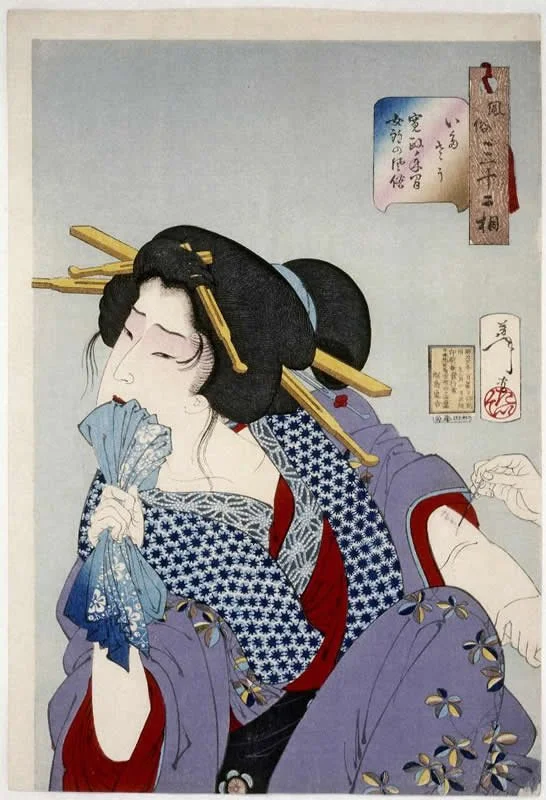
Lady Getting Tattooed by the Tsukioka Yoshitoshi