Strength in Motion: The Enduring Appeal of Koi Tattoos
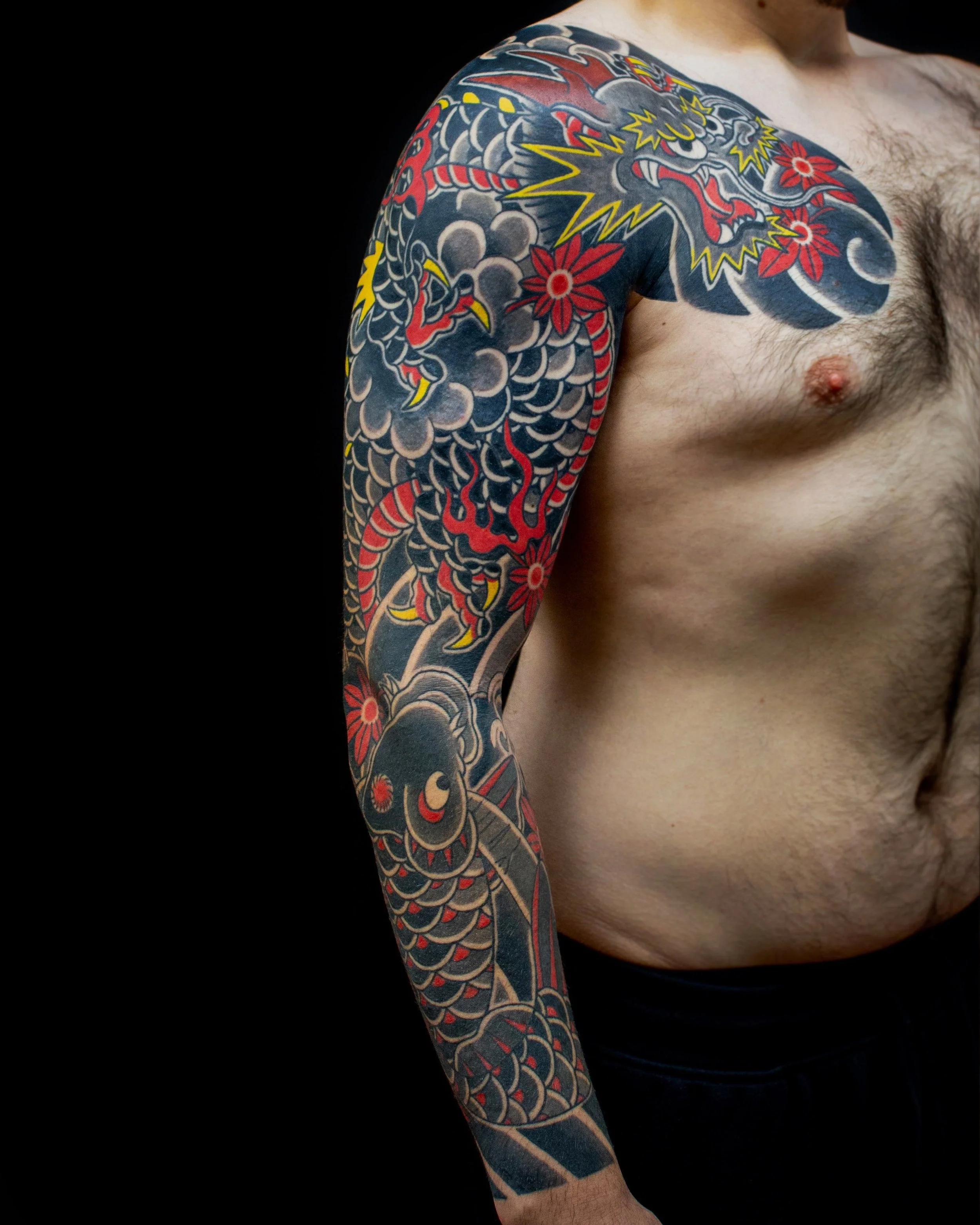
Koi and Dragon full sleeve with chest plate. Done by Horiyama
Why Koi Fish Tattoos Are So Popular (And Why They Never Go Out of Style)
If you’re thinking about getting a Japanese tattoo, chances are you’ve come across koi fish. There’s a reason they show up again and again in irezumi. Koi are not just visually striking, they carry meaning, fit perfectly on most areas of the body, and work at every scale, from small tattoos to full bodysuits. As a Japanese tattoo artist working in Auckland, New Zealand, koi are one of the subjects I return to often. Not because they’re common—but because they’re timeless.
The Story Behind the Koi Fish
Koi (鯉) have been part of Japanese culture for centuries, originally bred from carp for their colour and pattern. But what gives them their lasting significance is the story behind them. According to folklore, a koi swims upstream against strong currents, eventually reaching the top of a waterfall known as the Dragon Gate. After overcoming this struggle, it transforms into a dragon. Because of this, koi represent:
perseverance
strength through adversity
transformation over time
It’s a meaning that naturally aligns with tattooing—something permanent that often reflects personal growth, not just a moment.
Why Koi Work So Well in Japanese Tattooing
From a design perspective, koi are one of the most versatile subjects in irezumi. Their shape allows them to naturally curve with the body—wrapping around arms, moving across the back, or travelling up the leg. They don’t sit flat; they create movement. They also pair seamlessly with traditional background elements like water splashes and wave bars. This allows the tattoo to feel cohesive rather than fragmented - a core part of Japanese tattooing. The tattoo is not just about the subject, but how everything works together in unison.
Koi Fish Tattoo Colours
Colour choice plays a big role in how a koi tattoo feels. While meanings can vary, these are some common associations:
Black koi – resilience, overcoming hardship
Red koi – passion, intensity, strong emotion
Gold / yellow koi – success, prosperity
Blue koi – calmness, steady strength
In practice, colour is chosen just as much for balance and contrast as it is for symbolism. A strong palette helps the tattoo read clearly and age well over time.
Scale Styles: Round vs Square
One detail that makes a big difference is the type of scales used.
Round scales give a softer, more traditional feel
Square (kikkō style 亀甲) scales create a stronger, more graphic look
This choice can subtly change the entire character of the tattoo. It’s a small detail, but one that adds a lot of personality to the final piece.
Where to See Koi in Japan
Seeing koi in person gives a completely different appreciation for them. Some of the best places to visit include:
Niigata Prefecture – known as the birthplace of ornamental koi
Rikugien Garden (Tokyo)
Kenrokuen Garden (Kanazawa)
Koi farms in Ojiya and Yamakoshi
Watching how they move through water makes it clear why they translate so naturally into tattooing.
Why a Koi Bodysuit Can Be So Powerful
A bodysuit made entirely of koi might sound simple, but it can be incredibly striking. Instead of relying on multiple subjects, the focus shifts to flow, repetition, and variation. Koi moving in different directions, interacting with water, wrapping around the body—this creates rhythm across the entire piece. It becomes less about individual elements and more about the overall composition. When done well, a koi bodysuit feels balanced, cohesive, and timeless.
Thinking About Getting a Koi Tattoo?
Whether you’re considering a sleeve, back piece, or full bodysuit, koi are one of the strongest subjects in Japanese tattooing. If you’re looking for a Japanese tattoo in Auckland or across New Zealand, and want something designed to flow with your body and last a lifetime, feel free to get in touch.