Tanabata: The Beautiful Japanese Legend of the Star-Crossed Lovers
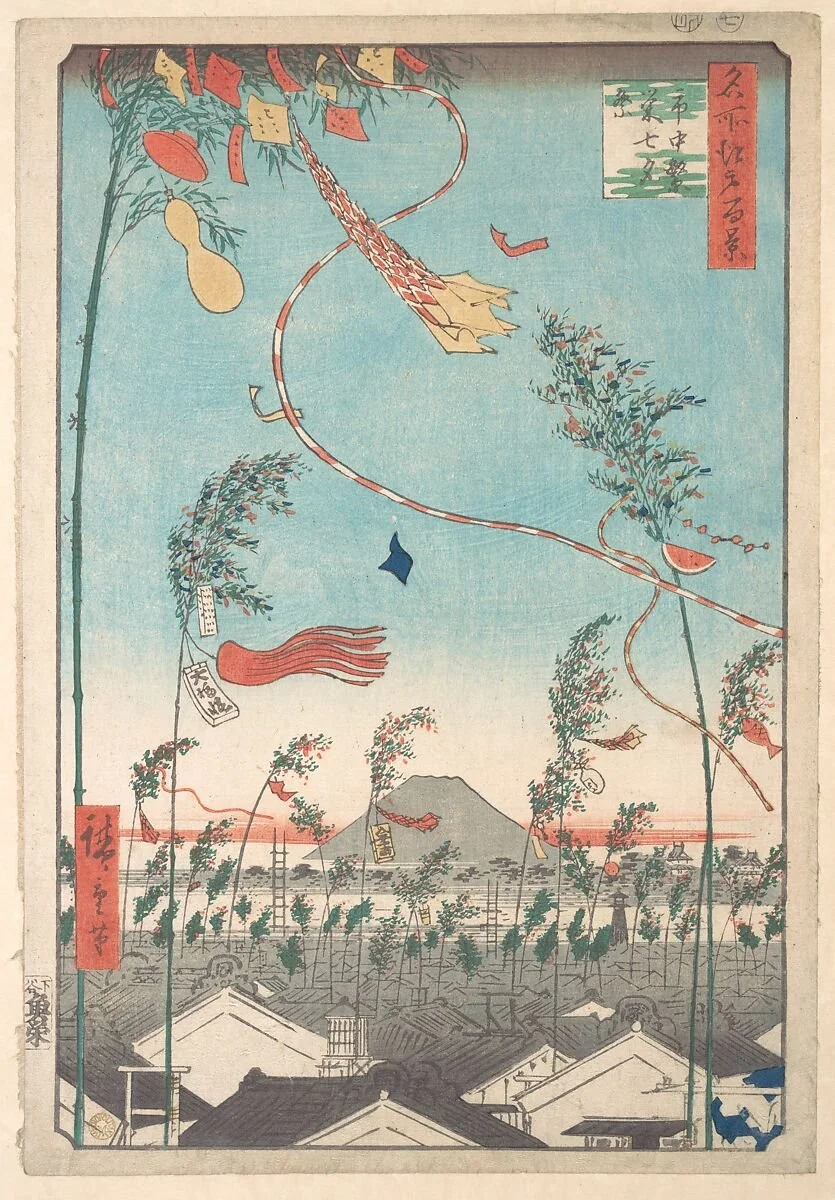
The Tanabata Festival, from the series One Hundred Famous Views of Edo.
Artist: Utagawa Hiroshige 1797–1858
Every year on July 7th, Japan celebrates one of its most romantic and beloved traditions: Tanabata (七夕), also known as the Star Festival.
While many people know Japan for its beautiful temples, sushi, and cherry blossoms, it’s festivals like Tanabata that reveal the country’s rich folklore and deep appreciation for storytelling. As a Japanese tattoo artist in Auckland, I love sharing these stories because they offer a glimpse into the culture that inspires so much of traditional Japanese art.
The Legend of Orihime and Hikoboshi
The story of Tanabata comes from an ancient Chinese legend that eventually became part of Japanese culture.
Orihime (織姫), the Weaving Princess, was the daughter of the Sky King. She spent every day weaving beautiful fabrics beside the heavenly river, known as the Milky Way.
Her father worried that she worked too hard and had become lonely, so he arranged for her to meet Hikoboshi (彦星), a hardworking cowherd who lived on the opposite side of the river.
The two instantly fell in love and were soon married.
However, after their wedding they became so devoted to each other that they neglected their responsibilities. Orihime stopped weaving, while Hikoboshi allowed his cattle to wander across the heavens.
The Sky King became furious. As punishment, he separated them on opposite sides of the Milky Way, allowing them to reunite only once each year, on the seventh day of the seventh month.
If the skies are clear, a bridge of magpies forms across the stars so the lovers can meet. If it rains, the river becomes too difficult to cross, and they must wait another year.
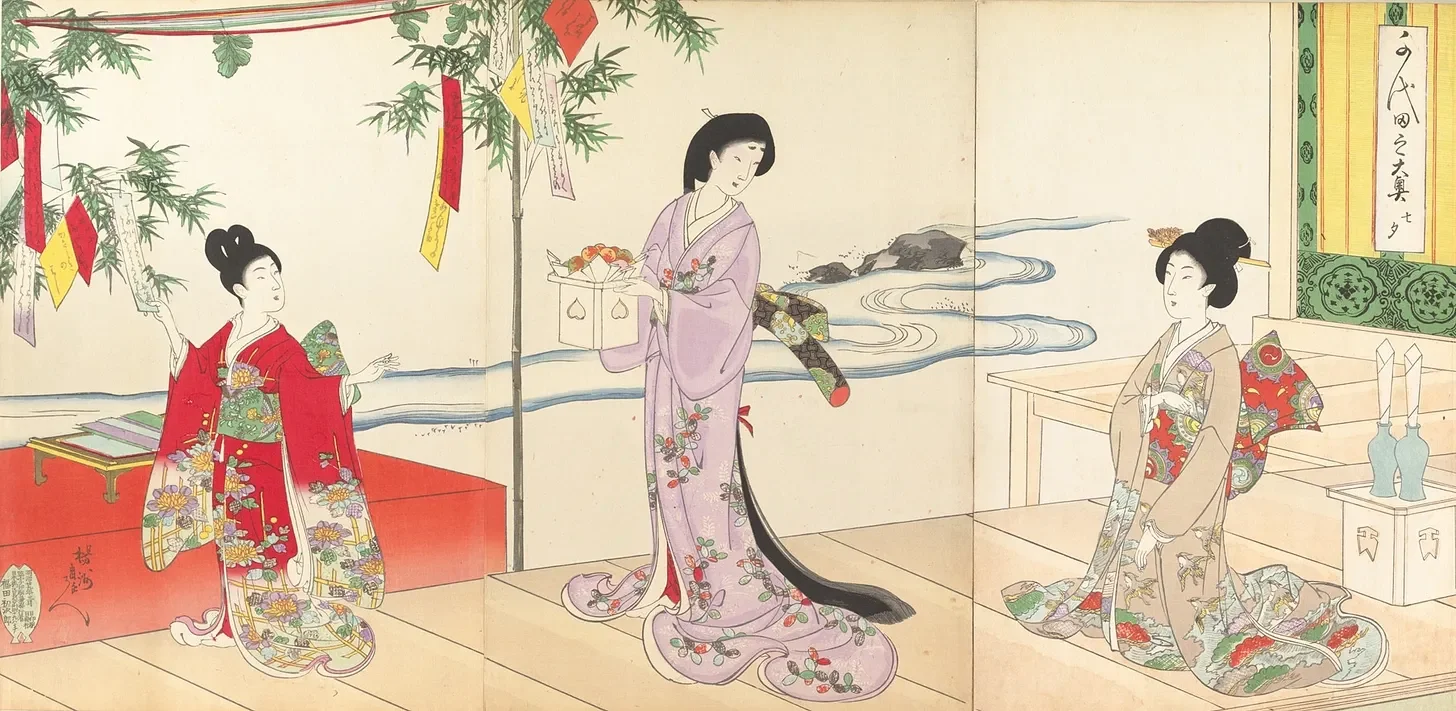
Ladies of Chiyoda Palace - Star Festival’ - Toyohara Chikanobu, 1895.
How Tanabata Is Celebrated
Today, Tanabata is celebrated throughout Japan with colourful festivals, decorations and community events.
One of the most recognisable traditions is writing wishes on small strips of coloured paper called tanzaku (短冊). These wishes are tied to bamboo branches alongside handmade paper decorations.
People write wishes for:
Good health
Success in school or work
Love and relationships
Personal goals and dreams
Happiness for family and friends
Walking through a Japanese town during Tanabata is a beautiful sight, with streets filled with flowing streamers and vibrant bamboo displays covered in handwritten wishes.
The Stars Behind the Story
The legend is inspired by two real stars.
Orihime is represented by Vega, while Hikoboshi is represented by Altair. During summer in the Northern Hemisphere, these are among the brightest stars in the night sky, separated by the Milky Way.
It’s a wonderful example of how ancient people used the stars to tell stories that continue to be celebrated centuries later.
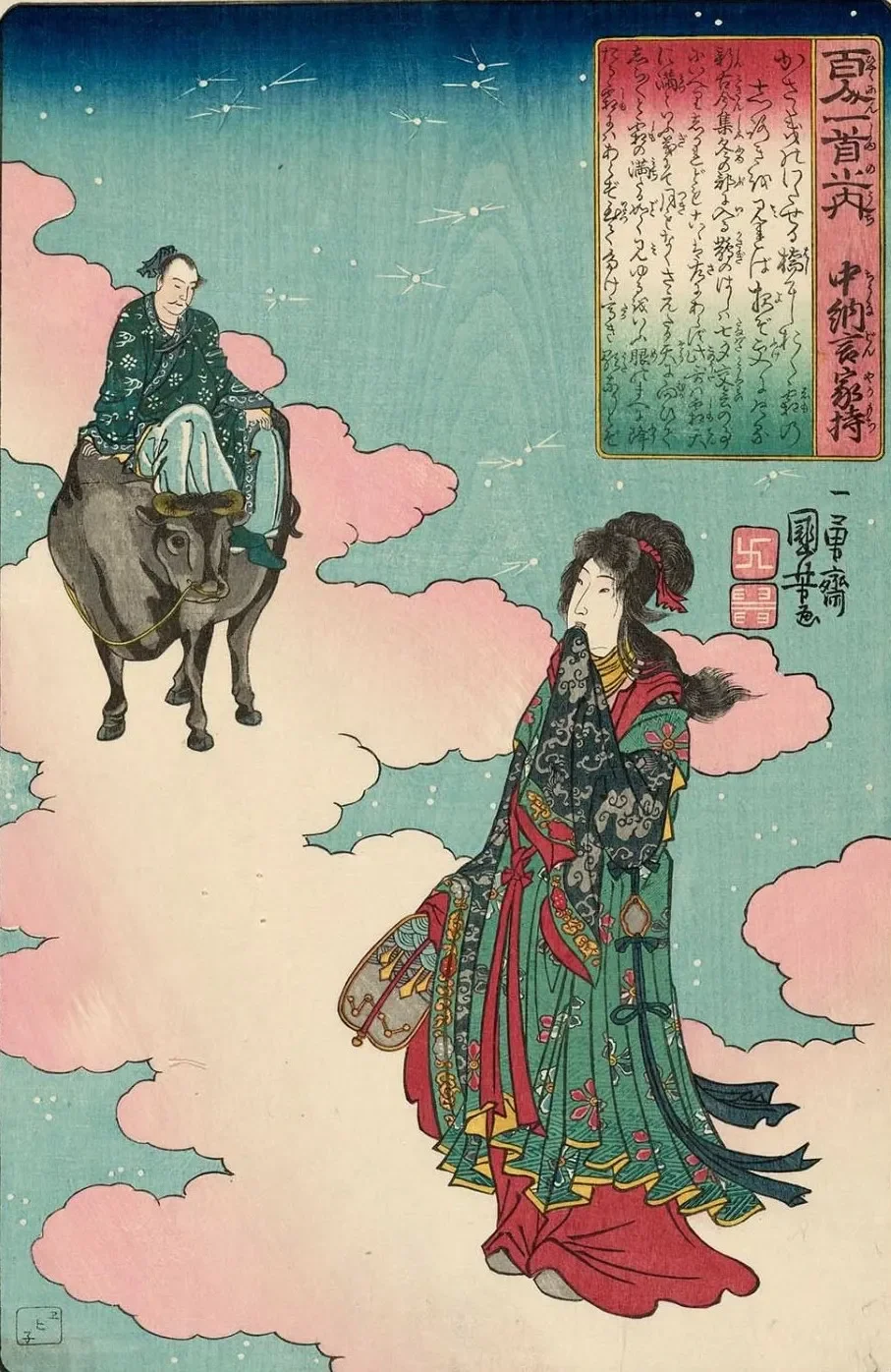
The Herdsman and the Weaver Stars’ - Utagawa Kuniyoshi, 1840
Inspiration in Japanese Art
Traditional Japanese art has always drawn inspiration from folklore, nature and seasonal celebrations.
Although Tanabata isn’t a common subject for Japanese tattoos, the ideas behind it—love, perseverance, destiny and hope—are themes that resonate deeply throughout Japanese mythology.
Many people are surprised to learn that behind every creature, flower or historical figure found in Japanese tattooing lies a story with generations of meaning. Understanding these legends adds another layer of appreciation to the artwork itself.
A Tradition Worth Keeping Alive
One of my favourite things about Japanese culture is how these centuries-old traditions continue to bring people together today.
Whether you’re visiting a Tanabata festival in Japan, writing a wish on a piece of tanzaku, or simply taking a moment to look up at the stars on July 7th, it’s a reminder that hope, patience and connection are timeless.
Stories like Tanabata are part of what makes Japanese culture so fascinating, and they’re one of the many reasons I’m continually inspired by its history and folklore—both in my life and in my work as a Japanese tattoo artist in Auckland.
Thank you for reading, and if you’re celebrating Tanabata this year, I hope your wishes find their way across the Milky Way.