Flower Meanings in Japanese Tattoos
In traditional Japanese tattooing (Irezumi), flowers and natural elements are much more than decoration. They help balance the composition and colour distribution of a tattoo while also adding deeper layers of symbolism connected to nature, the seasons, and the cycles of life. Many large-scale Japanese tattoos (such as sleeves, back pieces, and body suits) include floral or seasonal elements that support the main subject. These motifs help guide the flow of the design across the body while also giving the tattoo a sense of harmony and storytelling. For those considering a Japanese tattoo in Auckland or elsewhere in New Zealand, understanding the meanings behind these traditional motifs can help when deciding which elements feel most meaningful to include in a design. Below are some of the most common flowers and natural motifs used in Irezumi tattooing, organised by season.
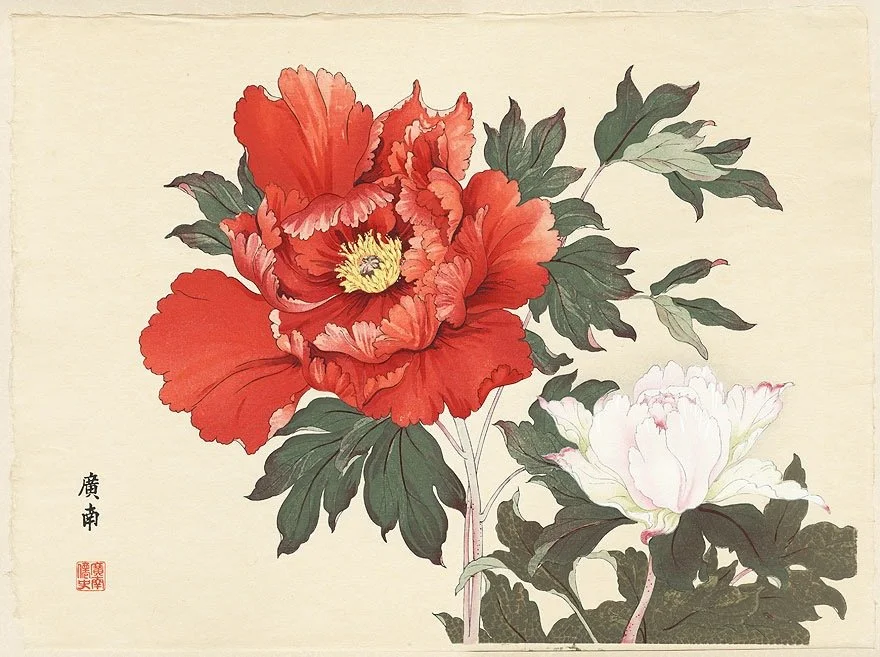
Imperial Exhibition Peony by Tanigami Konan (1879 - 1928)
Spring
Cherry Blossom 桜 (Sakura)
The cherry blossom is perhaps the most recognisable flower in Japanese culture. Cherry blossoms bloom brilliantly but only for a short time before falling, symbolising the fleeting beauty of life. Because of this, sakura often represent impermanence, appreciation of the present moment, and the acceptance that life is constantly changing. In Japanese tattooing, cherry blossoms are frequently paired with samurai imagery, reflecting the samurai philosophy of embracing life fully while understanding its temporary nature.
Plum Blossom 梅 (ume)
The ume blossom blooms at the very end of winter, often appearing while snow is still on the ground. Because of this, ume symbolises perseverance, hope, and renewal. It represents the quiet strength needed to endure hardship before the arrival of brighter times. In tattoo compositions, plum blossoms often accompany birds, bamboo, or seasonal landscapes, marking the transition from winter into spring.
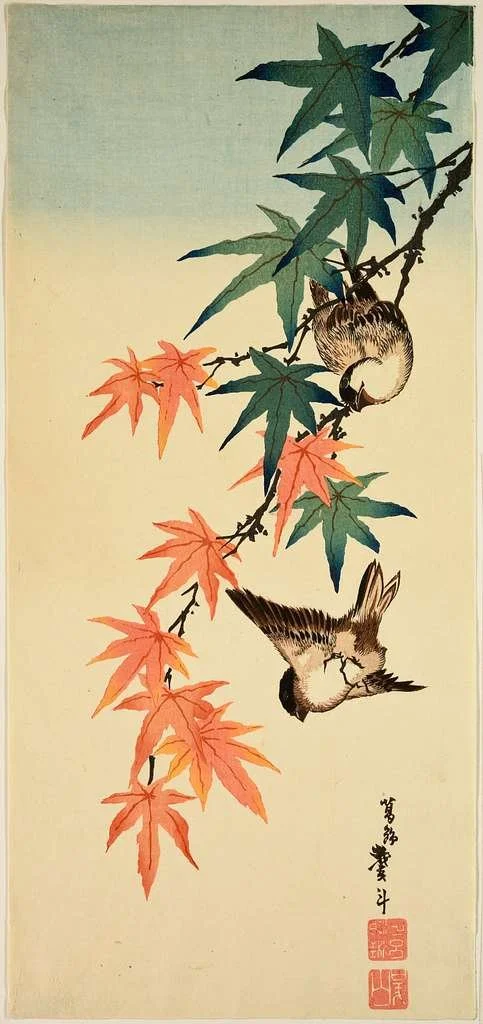
Katsushika Hokusai - Two birds on maple branch 1800-1899
Summer
Peony 牡丹 (Botan)
The peony is one of the most iconic flowers used in Japanese tattoo (Irezumi) and is sometimes called the “King of Flowers.” Peonies symbolise prosperity, beauty, abundance and flourishing life. In traditional imagery they are often paired with powerful animals such as fu dogs (shishi), dragons, or tigers, representing the balance between strength and elegance. The layered petals of the peony make it especially striking in both colour and black-and-grey Japanese tattoos.
Camellia 椿 (Tsubaki)
The camellia is known for its bold petals and glossy leaves. In Japanese symbolism, camellias represent devotion, admiration, and quiet strength. Historically they were associated with the samurai class, as the flower sometimes falls whole from the stem, symbolising the sudden end of a warrior’s life. Despite this dramatic symbolism, camellias are widely appreciated for their refined elegance and resilience, making them a beautiful ornamental element within tattoo designs.
Autumn
Chrysanthemum 菊 (Kiku)
The chrysanthemum is strongly connected to the Japanese imperial family and symbolises longevity, renewal, and nobility. Because chrysanthemums bloom late in the year, they are often associated with maturity, and the passage of time, representing strength that continues even as the seasons change. Their abundant petals also make chrysanthemums particularly effective for filling large spaces in sleeves and back pieces.
Maple Leaf 紅葉 (Momiji)
The Japanese maple leaf represents the beauty of change and the passage of time. Maple leaves are closely associated with autumn, often shown drifting through wind or water in Japanese art. In tattoo compositions they symbolise transition, maturity, and the natural cycle of life. Their sharp, pointed shape also feels more geometric compared to the other floral elements.
Ginkgo Leaf 銀杏(Icho)
The ginkgo tree is one of the oldest living tree species in the world. Because of its long history and resilience, the ginkgo leaf symbolises longevity, endurance, and strength through adversity. In Japan, ginkgo trees are often planted at temples and shrines, representing stability and long life. Their distinctive fan-shaped leaves also create a unique visual element within tattoo designs.
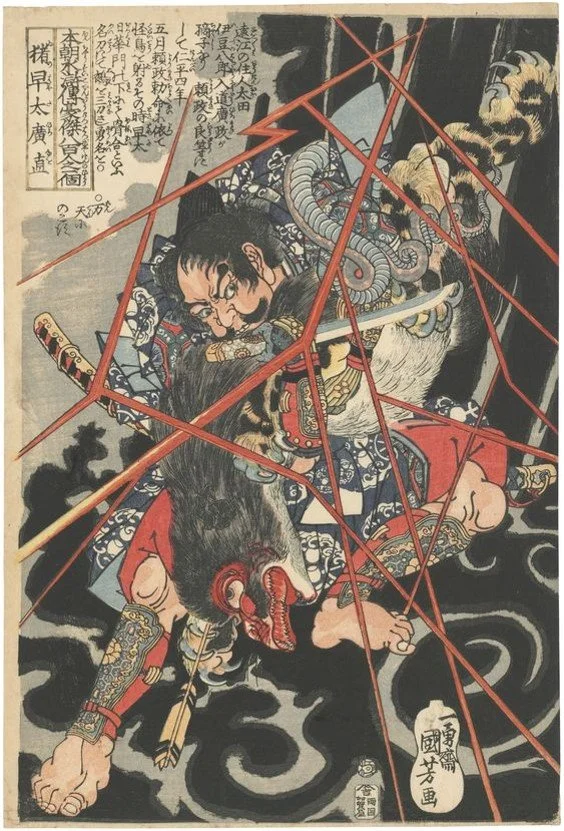
One of the Eight Hundred Heroes of the Water Margin of Japan - Kuniyoshi 1830-1832.
Winter
Pine 松 (Matsu)
The pine tree is a powerful symbol in Japanese culture and appears frequently in traditional art and tattooing. Because pine trees remain green throughout winter, they represent longevity, endurance, and steadfastness. Pine symbolises the ability to remain strong through difficult conditions and continue growing despite hardship. In Japanese tattoo compositions, pine branches are often used to frame subjects such as cranes, dragons, tigers, or samurai, helping anchor the design while creating a sense of natural landscape.
Bamboo竹(Take)
Bamboo symbolises strength, flexibility, and resilience. Unlike rigid trees, bamboo bends easily in strong wind without breaking. Because of this, it represents the idea of remaining strong while adapting to life’s challenges. Bamboo is also associated with growth, vitality, and moral integrity. In tattoo design, bamboo stalks create strong vertical lines that guide the composition across the body. Bamboo is traditionally paired with pine and plum blossom, forming the classic grouping known as the “Three Friends of Winter,” which symbolises perseverance and strength through difficult seasons.
Lightning 稲妻 (Inazuma)
Although not a flower, lightning is a dramatic natural motif often used in traditional Japanese tattooing. Lightning represents energy, power, sudden change, and divine force. It frequently appears alongside subjects such as dragons, thunder gods, or heroic warriors, enhancing the intensity and movement of the subject matters. In Irezumi backgrounds, lightning can help create dramatic colour bursts and guide the viewer’s eye through the design.
Choosing a Floral Element
If you are considering a Japanese tattoo in Auckland or elsewhere in New Zealand, choosing floral elements that resonate with you can be a great starting point. As a tattoo artist specialising in traditional Japanese tattooing, I enjoy working closely with clients to select elements that complement the main subject while remaining true to the principles of Irezumi design. If you would like to discuss ideas for a sleeve, back piece, or large-scale Japanese tattoo, you can get in touch through the contact page on my website. Thank you for reading!