Gashadokuro & Tsuchigumo Sleeve
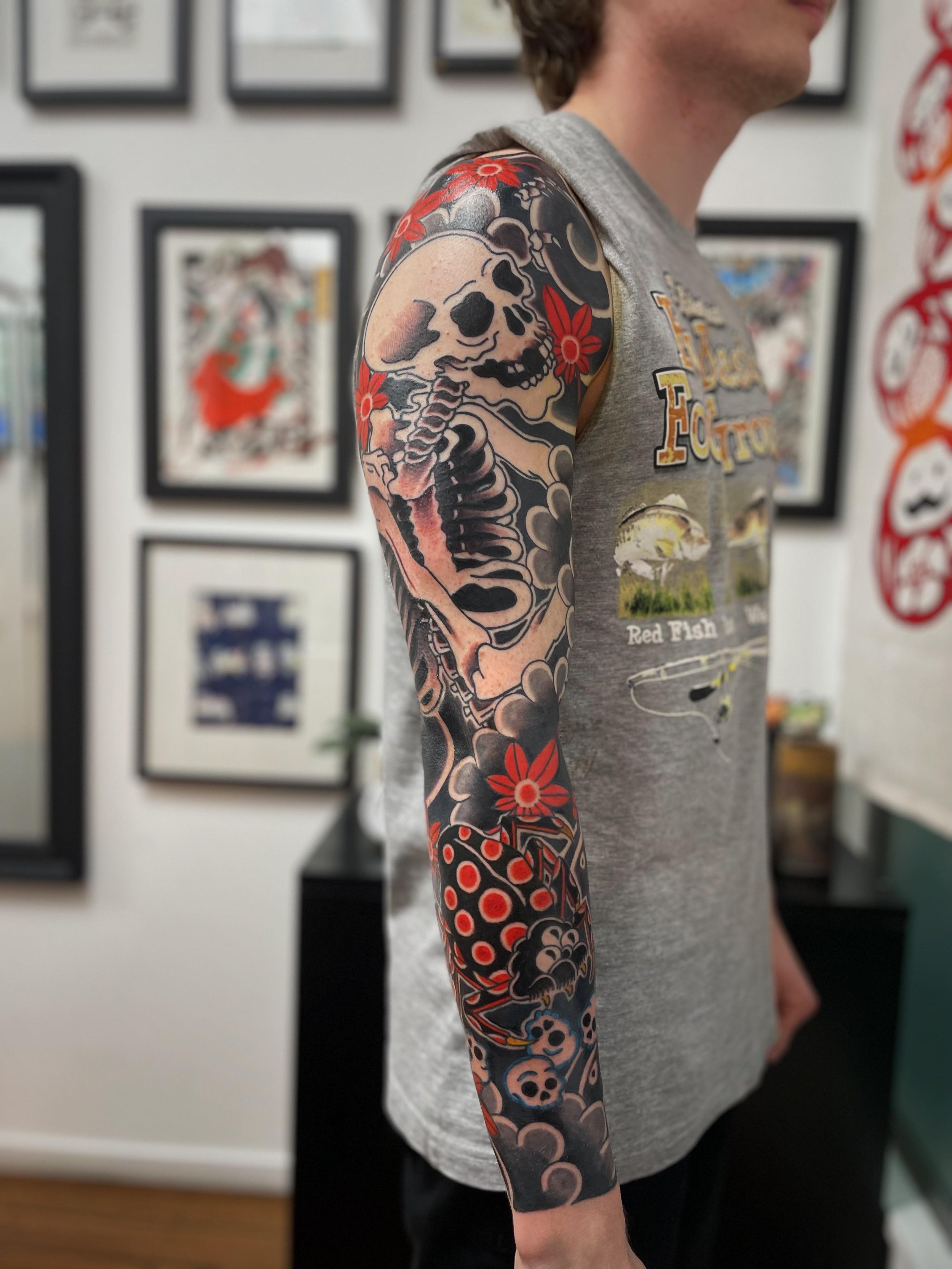
Done by Horiyama. Auckland, New Zealand
When it comes to powerful imagery in traditional Japanese tattooing, few themes stir the imagination like yokai — supernatural beings that embody the fears, mysteries, and moral lessons of Japanese folklore. This Gashadokuro and Tsuchigumo sleeve blends two of the most compelling yokai into a cohesive narrative piece that’s not only visually striking but rich with symbolic meaning and deep cultural roots. As a tattoo artist specialising in Japanese tattoo and irezumi in Auckland, New Zealand, creating work like this is a chance to honour the mythic past while crafting something timeless for the wearer.
The Legends Behind the Yokai
Gashadokuro — The Starving Skeleton
The Gashadokuro is a giant skeletal yokai born from the bones of the unburied dead — those who perished in famine, war, or tragedy without proper rites. According to folklore, these enormous skeletons wander the countryside at night, their teeth rattling with a bone-chilling sound that gives them their name (“gasha” mimicking that clatter, “dokuro” meaning skull). They are said to stalk lone travellers, crushing or devouring them in their immense bony hands. In the context of a tattoo, the Gashadokuro represents more than fear: it embodies unfinished business, unresolved suffering, and the raw power of collective memory. It’s an arresting figure that can dominate a sleeve, drawing the eye and anchoring the composition with its stark, towering presence.
Tsuchigumo — The Earth Spider
Tsuchigumo — literally “earth spider” — brings a different kind of menace. Originally a derogatory term for renegade clans in early chronicles like the Nihon Shoki, the tsuchigumo later evolved in medieval tales into a monstrous spider yokai. In these stories, it lurks in caves and mountains, capable of illusion and shapeshifting, deceiving heroes and ensnaring the unwary in silk and lies. In classic narratives like the Raikoo Extermination Tale, tsuchigumo can morph into alluring or deceptive forms before revealing its true, grotesque spider form — a powerful symbol of hidden danger and cunning. It contrasts beautifully with the brutish force of the Gashadokuro.
Design & Composition
This sleeve brings the two yokai into a dynamic relationship. The Gashadokuro — skeletal, towering, and visceral, sits as the central focus, its long limbs and exaggerated height creating vertical movement up the arm. Opposing this is the Tsuchigumo, its legs, silk strands, and webbing weaving in and out of the negative space, tying the composition together and guiding the eye around the sleeve.
Symbolism in Movement
The contrast between fleshless bone and living spider evokes a narrative of persistence versus entrapment — two facets of struggle and survival that resonate in both folklore and personal expression. Threads of web spiral around skeletal ribs and limbs, while shadowed background elements help anchor each figure without crowding the design.
Irezumi Background & Traditional Elements
In irezumi, background is crucial. Unlike Western tattoo approaches where a single figure might float in space, Japanese tattooing uses background elements like wind bars, clouds, and traditional patterning to integrate all parts into a unified flow.
For this sleeve, the background incorporates:
Stylised wind and cloud to suggest an eerie night that chase both yokai across the skin.
Negative space breaks that allow the primary figures to breathe while holding the eye.
Subtle shading transitions that help the skeletal form and spider feel like they’re part of the same story rather than separate pieces.
These techniques enhance the dramatic impact while staying true to traditional Japanese tattoo principles.
Why This Makes a Great Tattoo
This design is more than a striking visual — it’s storytelling through art. For clients seeking a tattoo in Auckland or anywhere in New Zealand, a piece like this offers:
A narrative rooted in Japanese folklore rather than generic horror imagery.
Bold contrasts and flowing composition that age well on the body.
A connection to authentic irezumi techniques that respect the tradition while allowing personal meaning.
As a tattoo artist trained in the nuance of Japanese tattooing, creating cohesive sleeves that balance mythology, movement, and traditional style is one of the most rewarding challenges in our craft. If this style resonates with you, whether you’re in Auckland or across New Zealand, feel free to get in touch to discuss ideas.