Japanese Masks in Traditional Japanese Tattooing (Part 1)
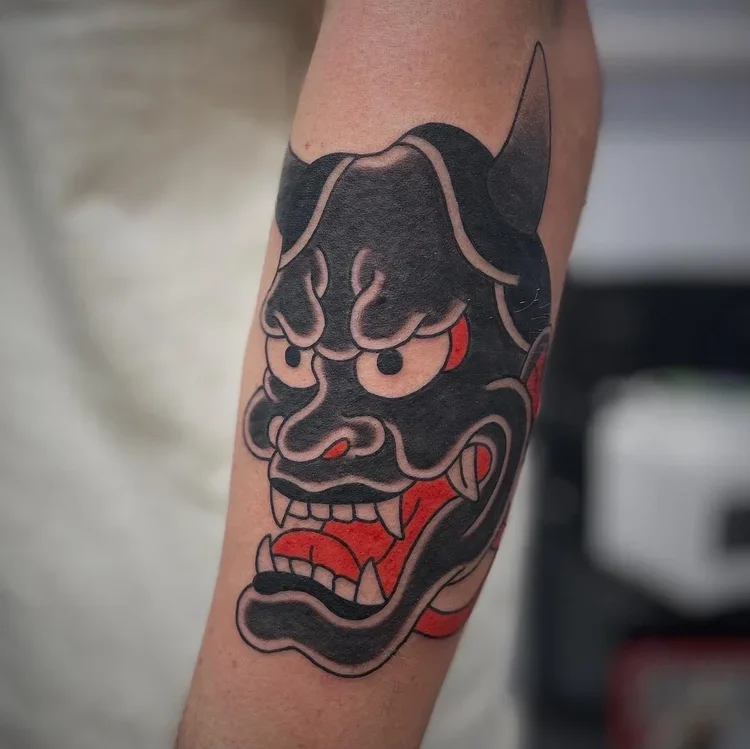
Hannya Mask done by Horiyama - Auckland NZ
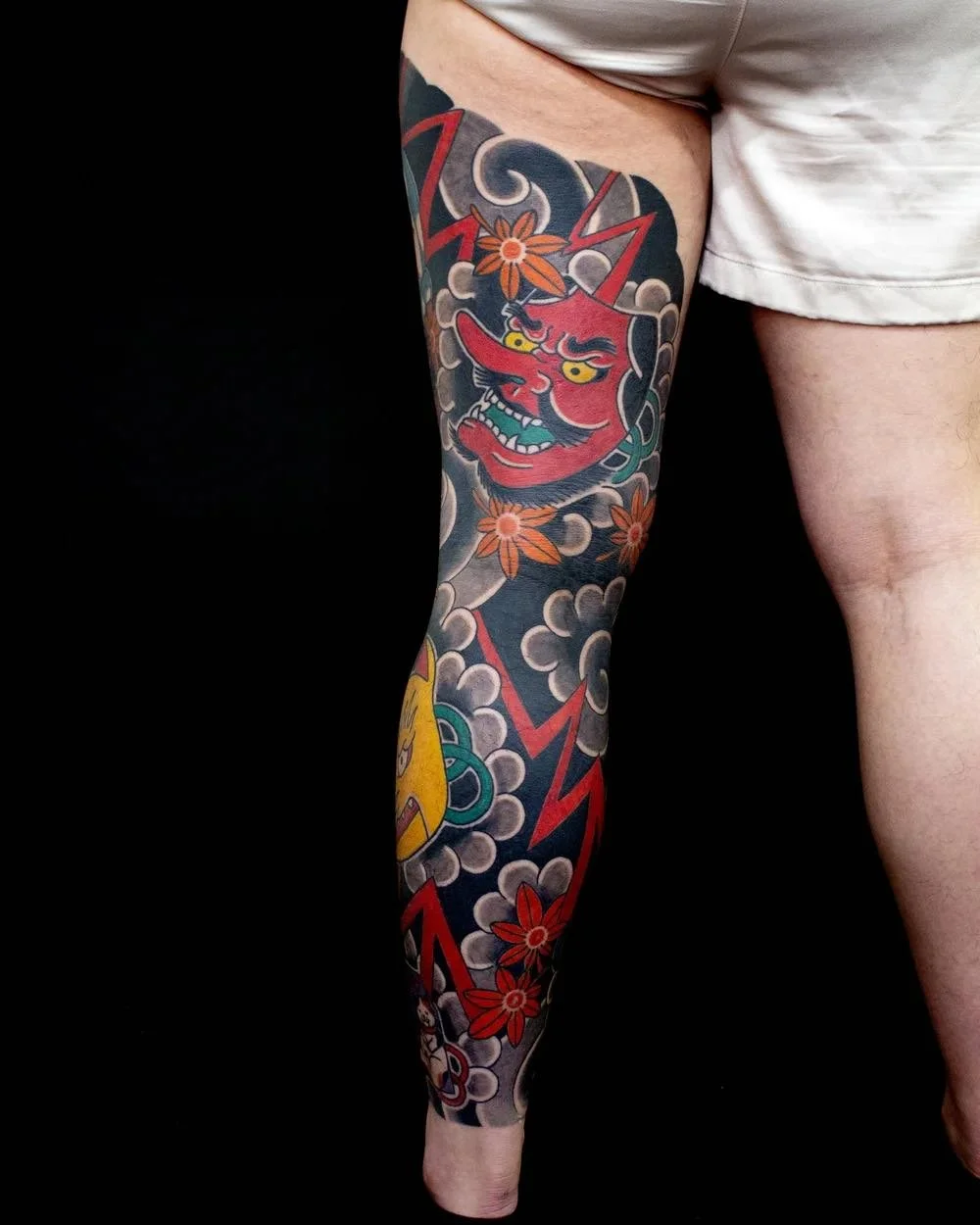
Mask leg sleeve done by Horiyama - Auckland New Zealand
Traditional Japanese masks are mostly decorative and are available for sale at shrine festivals and events. Others are worn during certain Shinto dances or by actors performing a role on the stage. Most of these masks are archetypes borrowed from myth, ancient dances or Noh theatre, and they have become some of the most popular Japanese masks that you’ll see today.
As the art of traditional Japanese tattoo progressed, it was natural for Japanese tattooers to incorporate masks into their clients tattoos to express certain cultural sentiments and meanings.
Many Masks have been adapted into tattooing through the works of Japanese ukiyo-e style of woodblock prints and painting artists of the Edo period, such as Utagawawa Kuniyoshi. Kuniyoshi’s work was very famous, and inspired many Japanese tattooers, as he provided illustrated designs of many Japanese Kabuki actors, myths, as wells as legendary samurai heroes.
Hannya
The most common, and well known in western culture is the Hannya mask. The Hannya mask first appeared in a well-known variety of traditional Japanese musical theatre known as “Noh Theatre” which was popular around this time. The actors in Noh plays would tell stories through gestures while adorned in intricate masks.
The Hannya mask was used in Noh plays to depict a woman who has become so overwhelmed with sorrow, envy, or rage that she takes on the form of a demon, dragon or serpent. Its prominent features are a leering mouth, sombre metallic eyes, sharp fang-like teeth, and two devil style horns.
Oni
Oni masks are most common during the Bean-Throwing Festival, also known as Setsubun, when people wear them for festival performances at shrines. Parents will even wear them at home to frighten their children, while the kids throw beans to scare the “oni” away and invite good luck into the house for the year.
Oni are demons. They are usually depicted as red-faced and angry with long sharp teeth. While this description is similiar to that of Hannya masks, Oni are illustrated more like goblins, and can often represent specific demons from Japanese myth and legend. Many of these have been adapted to suit Japanese tattoo.
Tengu
Tengu are the fearsome demi-gods who protect the mountains. These demon-like creatures are depicted with red faces and angry expressions. But their most obvious feature is a long, red nose. In the past, tengu were more birdlike. As they became human, that beak turned into a nose but kept its long shape. Tengu masks are used for Noh stage plays and certain Shinto festivals. They’re also often used as a decoration since the tengu are thought to frighten bad spirits and bring good luck.
The word Tengu is Chinese in its origins, and derives from the word Tiangou, meaning “Heaven Dog.” Oddly, only the name Tengu is shared between the Japanese and Chinese. In Chinese culture, the Tengu is a dog, whereas, in Japanese culture, the Tengu appears as having crow-like features. Tengu masks, typically used in religious festivals and Japanese Noh theater, show a bird-headed demon.
The Tengu had magical powers that enabled them to appear in people’s dreams, shapeshift, transport themselves, and move through space without ever moving their wings, and speak without moving their lips. Japanese folklore showed the Tengu as shapeshifting protectors of the Dharma who lead corrupt priests astray. In later legend, it was said that when a corrupt monk died, he was sent to the realm of the Tengu, where he was transformed into a phallic-nosed shame-filled monster.